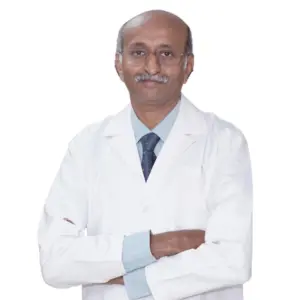
Medically reviewed by Dr. I. R. Ravish , Consultant Urologist, Nephro Uro Clinic
Urinary symptoms are easy to put off. A burning sensation, a weak stream or a few nights of disturbed sleep can seem minor, so many people wait until the discomfort becomes hard to ignore. Seeing a doctor early can help identify the cause sooner, and treatment is planned only after a proper evaluation.
Dr. I. R. Ravish is a urologist in Jayanagar, consulting at Nephro Uro Clinic, Jayanagar, Bengaluru. He consults adults and children for kidney stones, prostate conditions, bladder concerns, male infertility and urological conditions in children. The clinic is easily reached from nearby areas such as Tilaknagar, JP Nagar, BTM Layout and Basavanagudi. He has more than 28 years of medical practice, including over 20 years in urology. Each consultation includes a discussion of your symptoms, an explanation of the findings and the treatment options that may be suitable for you.
What Is Urology?
Urology is the branch of medicine that deals with the urinary system and the male reproductive system. The urinary system includes the kidneys, ureters, bladder and urethra. Together these organs filter waste from the blood and pass it out of the body as urine.
A urologist also looks after male reproductive health, including the prostate, testes and related structures. Problems in these areas can affect how you pass urine, how your kidneys function, or your ability to have a child. A urologist evaluates the symptoms, suggests suitable tests and explains treatment choices in plain language. The aim is to protect urinary health and help you return to your normal routine.
Meet Your Urologist in Jayanagar – Dr. I. R. Ravish
Qualifications: MBBS, MS (General Surgery), MCh (Urology), Fellowship in Pediatric Urology (University of Minnesota, USA)
Experience: 28+ years of medical practice, including 20+ years in urology
Clinic: Nephro Uro Clinic, Jayanagar, Bengaluru
Areas of focus: Paediatric urology, reconstructive urology, kidney stones, urinary tract anomalies, male infertility
Dr. Ravish trained in general surgery before specialising in urology, and he later completed a fellowship in paediatric urology. This combination of adult and child urology training is why families often bring both parents and children to the same clinic.
Over the course of his career he has worked as an Assistant Professor and Professor in urology departments and has published research in national and international journals. He has also served as Medical Director at hospitals in Bengaluru. Alongside his practice at Nephro Uro Clinic, he consults at Aster RV Hospital, Millers Road, Mallige Hospital, Aster CMI Hospital and Sagar Hospital.
His clinical work includes endoscopic and minimally invasive procedures, including laser-based treatment for stones and prostate enlargement. Treatment plans are built around the individual patient, not a fixed template.

When Should You See a Urologist?
Changes in how you pass urine, or in how well you control your bladder, are worth getting checked. Early evaluation helps find the cause before symptoms progress.
Consider booking a consultation if you notice any of the following:
- Leakage of urine while coughing, sneezing, laughing or exercising
- A frequent urge to pass urine, even when the bladder is not full
- Sudden urgency that is hard to hold back
- Waking up several times at night to pass urine
- Pain or burning while passing urine
- Blood in the urine, even a small amount
- A weak stream, straining, or a feeling that the bladder has not emptied fully
- Urinary infections that keep coming back
- Severe pain in the side or lower back that comes in waves
- Swelling, pain or a lump in the testicle
- Difficulty in conceiving after a year of regular, unprotected intercourse
Bladder leakage deserves a special mention. It is common in women above 50, particularly after multiple pregnancies, menopause or pelvic surgery, because the pelvic floor muscles can weaken over time. Many women assume it is simply part of ageing and never mention it. It is a recognised medical concern, and in most cases there are ways to manage it.
If you have blood in the urine, severe pain, fever with urinary symptoms, or you cannot pass urine at all, please seek medical care promptly instead of waiting for an appointment.
Conditions Evaluated and Treated
Dr. Ravish evaluates and treats a wide range of urinary and male reproductive conditions in patients of all ages.
- Kidney stones: Hard deposits that form in the kidney and can move into the ureter. They may cause severe pain, nausea, vomiting or blood in the urine. Treatment depends on the size and position of the stone.
- Prostate enlargement (BPH): Common in men as they grow older. It can cause a weak stream, frequent urination, night-time urination and a sense of incomplete emptying.
- Urinary tract infections: Infections of the bladder, urethra or kidneys, often showing up as burning, urgency and lower abdominal discomfort.
- Urinary incontinence and overactive bladder: Leakage, urgency and frequent urination that interfere with work, travel and sleep.
- Male infertility: Low sperm count, reduced motility or other issues that affect the chances of conceiving. Evaluation usually starts with a semen analysis and a hormone profile.
- Erectile dysfunction: Difficulty in achieving or maintaining an erection. It can have physical, hormonal or lifestyle causes.
- Urinary blockage: Obstruction caused by stones, an enlarged prostate or narrowing of the urethra.
- Hydronephrosis: Swelling of the kidney because urine is not draining properly.
- Kidney and bladder conditions: Including structural abnormalities and long-standing inflammation such as interstitial cystitis.
- Urological cancers: Cancers of the kidney, bladder, prostate and male reproductive organs need prompt evaluation and a coordinated plan.
- Paediatric urological conditions: Bedwetting, congenital urinary tract abnormalities, hypospadias, undescended testes and urinary infections in children.
- An accurate diagnosis comes first. Once the cause is clear, treatment can be discussed with you step by step.
Treatment Options Available
Not every urological condition needs surgery. Many are managed with medication, dietary changes or regular monitoring. When a procedure is appropriate, the options may include:
- Kidney stone procedures: Laser lithotripsy, ureteroscopy (URS), retrograde intrarenal surgery (RIRS) and percutaneous nephrolithotomy (PCNL). The choice depends on the stone’s size, location and your overall health.
- Prostate procedures: HoLEP (holmium laser enucleation of the prostate) and TURP (transurethral resection of the prostate) for prostate enlargement that does not respond to medication.
- Urodynamic testing: A test that measures how the bladder stores and releases urine. It helps assess incontinence, overactive bladder and difficulty in emptying.
- Male fertility procedures: Microsurgical varicocele repair and surgical sperm retrieval, where clinically indicated.
- Paediatric urology: Evaluation and surgical care for congenital conditions, hypospadias and recurrent urinary infections in children.
- Laparoscopic and reconstructive procedures: Including pyeloplasty for a blocked kidney outlet and urethral reconstruction for narrowing of the urethra.
Every option is explained before any decision is made, including its purpose, what recovery usually involves and possible risks. Outcomes vary from person to person, and the final decision is always yours.
Diagnosis and Tests in Urology
Tests are chosen according to your symptoms, so you will not be asked to do everything at once. Commonly used investigations include:
- Urine examination: Looks for infection, blood or other abnormalities.
- Blood tests: Check kidney function and, where relevant, hormone levels or PSA.
- Ultrasound of the abdomen and pelvis: Shows the kidneys, bladder and prostate without radiation.
- Uroflowmetry: Measures the speed and pattern of your urine flow.
- CT scan: Helps locate stones and identify blockages.
- Semen analysis: The first step in evaluating male fertility.
- Prostate evaluation: Advised for men with urinary symptoms, based on age and clinical findings.
Tests such as urodynamics are carried out at the clinic, so you can have the assessment and the discussion in the same place.
What Happens During a Urology Consultation?
Many people feel nervous before their first urology visit. Knowing the steps can make it easier.
- Conversation about your symptoms. The doctor asks what you are experiencing, how long it has been going on and how it affects your day. Please bring any previous reports, prescriptions and a list of current medicines.
- Physical examination. A focused examination is done only as far as needed to understand your condition. Your privacy and comfort are respected throughout.
- Tests, if needed. Based on what you describe and what is found, simple investigations such as urine tests, blood tests or an ultrasound may be advised.
- Explanation and plan. Findings are explained in simple terms. You will hear the likely cause, the treatment options and what each involves. You are welcome to ask questions or take time to decide.
- Follow-up. You will be told about medicines, precautions, warning signs and when to return, so progress can be reviewed.
Care for Children and Families
Urological problems in children need a gentle approach and an understanding of how a growing child’s body differs from an adult’s. Dr. Ravish’s fellowship training in paediatric urology covers conditions such as bedwetting, congenital urinary tract differences, recurrent infections, hypospadias and undescended testes.
Parents are included at every stage. The doctor explains the condition in language that makes sense to the family, and where possible, to the child as well. Adult and child consultations are available at the same clinic, which many families find convenient.
Simple Habits for Better Urinary Health
Small daily habits can support the kidneys and bladder:
Drink enough water throughout the day. Pale yellow urine is a general sign of good hydration, though people with certain medical conditions may need specific fluid advice from their doctor.
- Do not hold urine for long periods.
- Maintain good personal hygiene, and for women, wipe from front to back.
- Eat a balanced diet and limit excess salt, which can contribute to stone formation in some people.
- Stay physically active and maintain a healthy weight.
- Do not self-medicate with painkillers over long periods, since this can affect kidney health.
- Men above 50, or younger men with a family history of prostate problems, should discuss screening with a doctor.
These habits support urinary health but do not replace medical evaluation when symptoms appear.
Conclusion
Urinary and prostate symptoms are common, and in many cases they can be managed well when evaluated at the right time. You do not need to wait for severe pain or an emergency to speak to a specialist.
Dr. I. R. Ravish offers consultations at Nephro Uro Clinic, Jayanagar, for patients from Jayanagar, Tilaknagar, JP Nagar, BTM Layout, Basavanagudi and across south Bengaluru. The goal of every visit is a clear diagnosis, an honest explanation and a treatment plan you understand and are comfortable with.
To book an appointment, contact Nephro Uro Clinic, 7th Block, Jayanagar, Bengaluru 560082, on 88612 21822. Dr. Ravish also consults at Sagar Hospitals, Tilaknagar.