
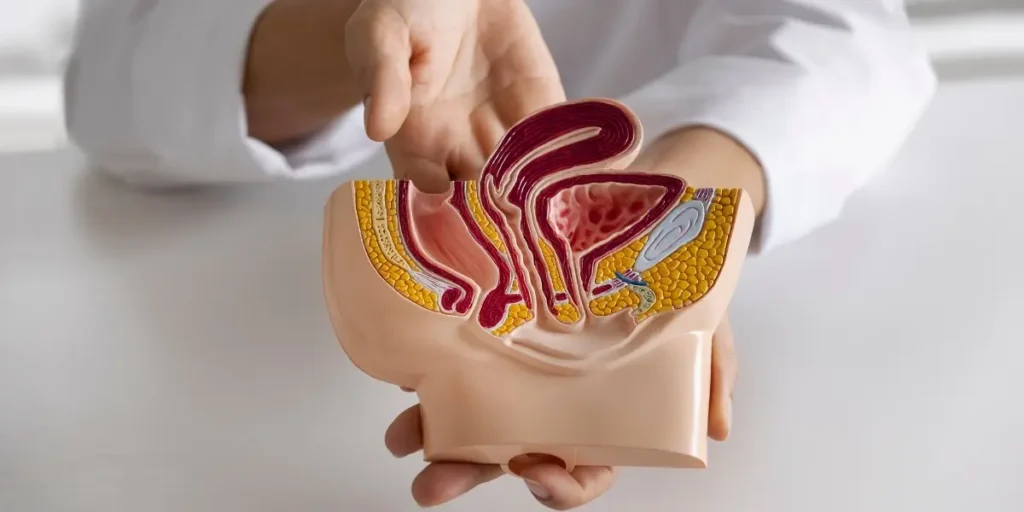
What is a Urodynamics Test?
A uro dynamics test is a group of assessments that measure how well your bladder stores urine and how well it empties. It looks at the pressure inside the bladder, the flow of urine, the activity of the muscles involved in urination, and how much urine remains after voiding.
The test does not treat a condition. It provides objective information that helps your doctor understand the cause of your symptoms, so the right treatment can be recommended. Without this information, certain bladder conditions are difficult to diagnose accurately.
Who Needs a Urodynamics Test?
A urodynamics study is recommended when bladder symptoms have not responded to initial treatment, when the cause of symptoms is unclear, or when surgery is being considered and more information is needed before proceeding.
Common reasons for referral include:
Urinary incontinence: When leakage occurs and the type is not clear from symptoms alone. Stress incontinence (leakage associated with increased abdominal pressure, such as from coughing, sneezing, lifting, or exercise) and urgency incontinence (leakage with a sudden, hard-to-control urge) usually require different treatments. Urodynamics can help confirm which mechanism is responsible.
Overactive bladder: Frequent, urgent need to urinate, with or without leakage, that has not improved with initial treatment.
Incomplete bladder emptying: A persistent feeling of not fully emptying, a weak stream, or straining to urinate that may point to obstruction or weak bladder muscle.
Recurrent urinary tract infections: Especially when linked to poor bladder emptying or abnormal voiding patterns.
Neurogenic bladder: Bladder dysfunction caused by neurological conditions such as spinal cord injury, multiple sclerosis, stroke, Parkinson’s disease, or spina bifida. These patients require detailed bladder assessment to guide safe long-term management.
Pre-surgical planning: Before bladder or incontinence surgery, urodynamics helps confirm the diagnosis and select the most appropriate procedure.
Post-surgical evaluation: When urinary symptoms persist or recur after a previous bladder or prostate operation.
Paediatric voiding disorders: Children with bedwetting beyond the expected age, recurrent urinary tract infections, or daytime accidents may be assessed with a modified urodynamics protocol.
Uroflowmetry vs. Full Urodynamic Study — Quick Comparison
| Uroflowmetry | Full Urodynamic Study (UDS) | |
|---|---|---|
| Invasiveness | Non-invasive | Involves catheterisation |
| What it measures | Urine flow rate, voided volume, flow pattern | Bladder pressure, flow, muscle activity, capacity, coordination |
| Catheter used | No | Yes — thin catheter in the bladder, sometimes a second sensor in the rectum |
| Typical use | First-line screening test | Detailed evaluation when screening is inconclusive or symptoms are complex |
Both are available at Nephro Uro Clinic. Your doctor will advise which is appropriate for your situation.
What Does the Test Involve?
Urodynamics is not a single test. It is a group of related assessments, and not every patient requires all of them. The tests performed are selected based on your specific symptoms and the information your doctor needs.
Uroflowmetry
This is usually the first assessment. You urinate privately into a special funnel connected to a measuring device. It records how fast urine flows, the total volume passed, and the pattern of the flow. It is completely non-invasive.
Peak urine flow rate (Qmax) is interpreted alongside voided volume, age, and sex rather than against a single fixed number, since normal ranges vary between individuals. As a general guide, a low Qmax can suggest possible obstruction or weak bladder muscle, but flow rate alone cannot tell these two causes apart — a pressure-flow study is usually needed to distinguish them.
Post-Void Residual Measurement
After you urinate, a quick ultrasound scan or a short catheter measurement checks how much urine remains in the bladder. There is no single cutoff that applies to everyone — normal residual volume is interpreted alongside your age, bladder capacity, and symptoms. Your doctor will explain what your specific result means in context.
Cystometry (Bladder Pressure Study)
A thin catheter is gently passed into the bladder and, in some cases, a second small sensor is placed in the rectum. Through the catheter, sterile fluid is slowly introduced to fill the bladder while sensors record the pressure inside. You are asked to report when you first feel the urge to urinate, when the urge becomes strong, and when you feel you must void. This measures bladder capacity, bladder wall behaviour during filling, and whether the bladder contracts involuntarily before you are ready to void. During filling, detrusor (bladder wall muscle) pressure is expected to remain low; elevated pressure during filling can point to bladder overactivity or reduced bladder compliance.
Pressure-Flow Study
After the bladder has been filled, you urinate while the pressure inside the bladder and the urine flow rate are measured simultaneously. This combination is one of the most reliable ways to distinguish between poor urine flow caused by a blockage and poor flow caused by a weak bladder muscle. Both can produce a similar symptom pattern but require very different treatments.
Electromyography (EMG)
In selected cases, small surface sensors placed near the urethra or perineum measure the electrical activity of the pelvic floor muscles during filling and voiding. This is particularly useful in patients with neurological conditions, as it shows whether the sphincter and bladder are coordinating properly.
Video Urodynamics
In complex cases, particularly for patients with neurogenic bladder or structural abnormalities, imaging is performed at the same time as the pressure measurements. A contrast-containing fluid is used to fill the bladder so that, under fluoroscopic (X-ray) imaging, the bladder shape, the presence of reflux, and the behaviour of the bladder outlet can be seen on screen during the study.
How Long Does the Test Take?
Duration varies considerably depending on which components are performed. A standard assessment (uroflowmetry with or without post-void residual) may take well under an hour, while a full study involving cystometry and a pressure-flow study typically takes 45 to 60 minutes including preparation and recovery. More complex assessments such as video urodynamics or paediatric studies may take longer. Your doctor or the clinic team will give you a time estimate specific to the tests planned for you.
What Does a Urodynamics Test Cost in Bengaluru?
The cost of a urodynamics test in Bengaluru typically ranges from ₹3,000 to ₹10,000, depending on which components are required, a simple uroflowmetry screening is at the lower end, while a full study involving cystometry, pressure-flow study, EMG, or video urodynamics is at the higher end. The exact cost depends on your specific clinical needs as assessed by your doctor.
Guidance on insurance coverage and TPA (Third Party Administrator) approval is available at the clinic reception desk, ask the team when you book your appointment.
(Note: Pricing is indicative and subject to change; please confirm current charges directly with the clinic.)
How to Prepare
Preparation is straightforward. Follow your doctor’s specific instructions, which may include:
- Bladder fullness: If uroflowmetry is being performed as the first step, you may be asked to arrive with your bladder comfortably full. Your doctor will advise you on this.
- Medications: Continue taking your regular medications unless specifically instructed otherwise. If you take medications that affect bladder function, such as anticholinergics or alpha-blockers, inform the clinic team when booking. Whether these should be paused before testing — and for how long — is a decision your doctor will make based on the purpose of your specific test. Do not stop any medication on your own without your doctor’s guidance.
- Caffeine: Some clinics advise avoiding caffeine on the morning of the test, as it can increase bladder urgency and potentially affect results. Follow the specific guidance given to you at booking, as this is clinic- and case-specific advice rather than a universal requirement.
- Active infection: Inform the team if you have symptoms of a urinary tract infection. A suspected or confirmed active infection is usually treated before proceeding with invasive urodynamic testing, as the appropriate course depends on your individual clinical circumstances.
Prerequisites Before Testing
Certain investigations are recommended before a full urodynamic study to support patient safety and improve the accuracy of results. Your doctor will advise specifically, but the following are commonly required:
- Urine culture and sensitivity: A urine culture taken within seven to fourteen days before the test is recommended to rule out active infection or asymptomatic bacteriuria. Passing a catheter into the bladder during an active infection carries a risk of infection spreading to the kidneys or bloodstream, so this step matters for your safety. If an infection is found, it is treated first and the test is rescheduled.
- Renal function test (serum creatinine): For patients with neurogenic bladder, upper tract dilation on ultrasound, or any indication of kidney involvement, a recent blood test for kidney function is advisable before proceeding with full urodynamics.
- Pelvic or KUB ultrasound: A recent ultrasound of the kidneys, bladder, and pelvis helps correlate findings such as post-void residual volume and provides structural information that supports interpretation of urodynamic results.
If you have had these investigations done recently, bring the reports to your appointment. If not, the clinic team will advise on arranging them beforehand.
What Does the Test Feel Like?
Urodynamics is generally described as uncomfortable rather than painful. Catheter placement causes brief discomfort. Some pressure or urgency may be felt during bladder filling, which is expected and is part of what the test measures. The team will explain each step before it happens.
After the test, mild burning or stinging during the first one to two urinations is common and settles quickly. Staying well hydrated for the rest of the day is generally advisable, unless your doctor has specifically advised fluid restriction for another reason.
Urinary tract infection after urodynamics is uncommon. Antibiotics are not routinely required for every patient — your doctor will decide, based on your individual risk factors and test findings, whether preventive antibiotics are appropriate in your case.
Post-Test Warning Signs — Contact the Clinic Immediately If You Notice:
- Visible blood in the urine (hematuria) that does not settle quickly
- Inability to urinate, or a sensation of urinary retention
- Fever above 100°F (38°C), chills, or worsening urinary symptoms
- Severe or worsening pelvic/lower abdominal pain
What Conditions Can Urodynamics Diagnose?
The test provides objective data that helps confirm or rule out:
Detrusor overactivity: Involuntary bladder muscle contractions during filling that can cause urgency and frequency. This is a urodynamic finding, and it is worth noting that it is not the same thing as overactive bladder (OAB) — OAB is a symptom-based clinical diagnosis, and detrusor overactivity is not found in every patient with OAB symptoms. Urodynamics helps clarify whether an underlying overactivity pattern is contributing to a patient’s OAB symptoms.
Urodynamic stress incontinence: A urodynamic pattern where leakage is demonstrated to occur with increases in abdominal pressure — for example during coughing, sneezing, lifting, or exercise, without an accompanying bladder contraction. Urodynamics can help confirm this mechanism in cases where the clinical picture is unclear.
Bladder outlet obstruction: In men, most commonly caused by an enlarged prostate. In women, this is relatively uncommon but can occur, for example after incontinence surgery or due to pelvic organ prolapse, and requires appropriate clinical and urodynamic assessment to confirm. It is generally suggested by the combination of low urine flow and elevated detrusor pressure during voiding.
Detrusor underactivity: A weak bladder muscle that cannot generate enough pressure to empty properly. This can produce a flow pattern that resembles obstruction on uroflowmetry alone, which is why a pressure-flow study is often needed to tell the two apart.
Neurogenic bladder: Various patterns of bladder dysfunction caused by nerve damage. Different patterns require different management strategies, making accurate urodynamic classification important.
Detrusor sphincter dyssynergia (DSD): A coordination failure between the bladder muscle contracting and the sphincter relaxing at the same time, most commonly seen after spinal cord injury. Because the sphincter does not relax as the bladder contracts, this pattern can generate persistently high pressures within the bladder and, over time, contribute to deterioration of the upper urinary tract (kidneys) if not identified and managed appropriately — which is why early detection through urodynamics matters for these patients.
Urodynamics for Children at Nephro Uro Clinic
Dr. I. R. Ravish holds a Fellowship in Pediatric Urology from the University of Minnesota, USA, and performs urodynamic assessments in children as part of his paediatric urology practice. Paediatric urodynamics uses modified protocols appropriate for the child’s age and size.
Children referred for urodynamics at Nephro Uro Clinic include those with:
- Bedwetting that persists beyond the expected age despite initial management
- Daytime urinary incontinence or urgency
- Recurrent urinary tract infections with suspected structural or functional cause
- Neurogenic bladder from spina bifida or spinal cord conditions
- Post-operative assessment after bladder or urethral surgery
The procedure is explained to both the child and the parent before it begins. The pace is adjusted to keep the child comfortable throughout.
Urodynamics at Nephro Uro Clinic, Bengaluru
Urodynamic testing is available at Nephro Uro Clinic in Jayanagar, Bengaluru. Dr. I. R. Ravish has over 28 years of total medical practice, including more than 20 years of dedicated urology experience. He performs urodynamic assessments as part of the diagnostic pathway for incontinence, overactive bladder, neurogenic bladder, and voiding dysfunction in both adults and children.
Test results are reviewed by Dr. Ravish personally. After the study, findings are explained in plain language and the implications for treatment are discussed clearly before any decision is made.
Nephro Uro Clinic is accessible to patients from Jayanagar, Tilaknagar, JP Nagar, BTM Layout, Bannerghatta Road, Koramangala, Basavanagudi, and other parts of Bengaluru.
To arrange a urodynamics assessment, discuss cost and insurance guidance, or find out whether this test is appropriate for your situation, contact the clinic directly.