
What Is the Difference Between Endoscopic and Laparoscopic Surgery?
Endoscopic surgery is done by passing a thin instrument through a natural body passage, such as the urethra, so there is no cut on the skin at all. This approach is used often in urology, for conditions such as an enlarged prostate or stones inside the urinary tract, since the urinary system already has a natural opening the surgeon can work through. A related technique called percutaneous surgery, used for some larger kidney stones, works through a single small puncture in the back rather than a natural opening. It is grouped with endoscopic care here because it also avoids a full incision, but it is worth knowing it is not passed through a natural passage.
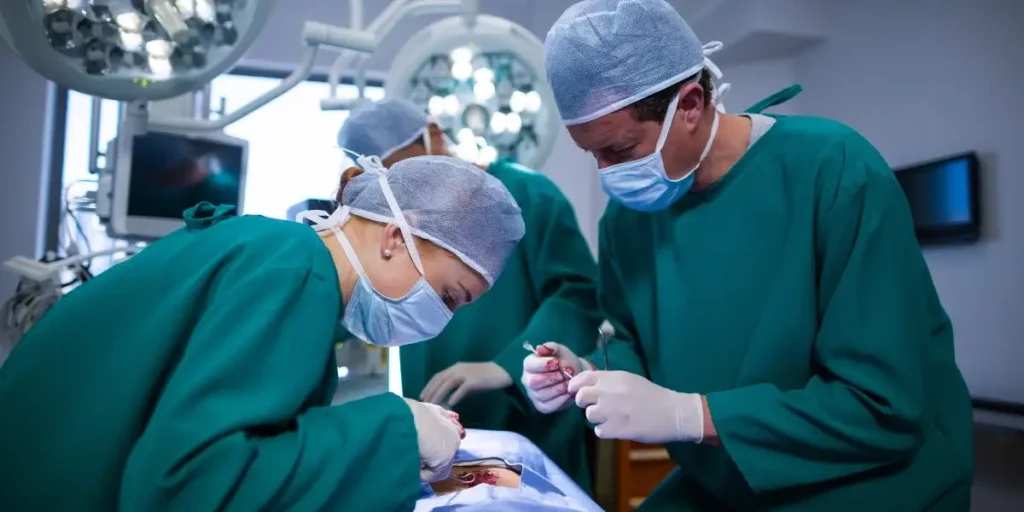
Laparoscopic surgery is done through a few small incisions in the abdomen. This approach is used when the organ being treated, such as the kidney, cannot be reached through a natural passage or a single puncture. A thin camera and long instruments are passed through these small cuts to carry out the surgery.
A note on robotic surgery. Robotic assisted surgery is a further development of laparoscopic surgery, where the surgeon controls robotic arms from a console rather than holding the instruments directly. It still uses small incisions like standard laparoscopy, but offers additional precision for certain complex procedures. It is a distinct technique from conventional laparoscopy, and availability varies by hospital and procedure.
Both approaches share the general goal of treating the condition with less trauma to the body than traditional open surgery, when the condition is suitable for a minimally invasive approach, but the specific benefit and the right technique depend on the individual case.
Endoscopic Urology Procedures
Dr. Ravish performs a range of endoscopic procedures for conditions of the prostate and urinary tract, including the following.
TURP and HoLEP for an enlarged prostate. These procedures treat benign prostatic hyperplasia, a common condition where the prostate grows and blocks urine flow, by removing the blocking tissue through the urethra. Dr. Ravish’s professional profile highlights particular experience in Holmium Laser Enucleation of the Prostate, a laser based technique for this condition. You can read more on our dedicated endoscopic prostate surgery page.
Ureteroscopy and PCNL for kidney and ureteral stones. Many stones can be treated by passing a thin scope up through the urinary tract to break up the stone using a laser, with no external cut. Larger stones inside the kidney itself are often treated with PCNL, short for percutaneous nephrolithotomy, where a small puncture in the back allows direct access to the kidney. Which method is right depends on the stone’s size, location, composition, and the patient’s individual anatomy, and is decided after imaging and assessment.
Cystoscopy. This is a shorter procedure used to look inside the bladder using a thin scope, often used to investigate symptoms such as blood in the urine or to check the bladder as part of ongoing care.
Laparoscopic Urology Procedures
For conditions involving the kidney or the tube connecting the kidney to the bladder, a laparoscopic approach through small abdominal incisions is often considered, including the following.
Laparoscopic nephrectomy, which is the removal of all or part of a kidney, depending on whether the whole kidney or just the affected portion needs to come out. This is used for conditions such as severe kidney damage, disease, or cancer.
Laparoscopic pyeloplasty, which repairs a blockage at the ureteropelvic junction, the point where the kidney joins the ureter, known medically as UPJ obstruction.
Laparoscopic ureterolithotomy, used for a smaller number of large stones stuck in the ureter that are not suitable for ureteroscopy or PCNL.
Full details on these procedures, including recovery timelines and what to expect, are covered on our laparoscopic urology page.
Understanding the Risks
Every surgical approach carries some risk, and being aware of these beforehand is part of making an informed decision.
With endoscopic procedures, possible risks include temporary burning or discomfort while passing urine, some blood in the urine for a short period, and, less commonly, narrowing of the urethra called a stricture, which can develop after the area heals.
With laparoscopic procedures, possible risks include injury to nearby organs or blood vessels while the small incisions are made, a rare but recognised risk of gas related complications from the carbon dioxide used to create working space, and a small chance that the operation may need to be converted to open surgery if it becomes necessary for safety.
These risks are uncommon, and Dr. Ravish will go through the ones relevant to your specific procedure during your consultation, so you know what to expect and what to watch for.
A Note on Stents After Upper Tract Procedures
If you have a procedure involving the kidney or ureter, such as laparoscopic pyeloplasty, laparoscopic ureterolithotomy, or a more involved ureteroscopy, your surgeon may place a small internal tube called a double J stent to help the area heal and keep urine flowing normally. This is a routine and expected part of recovery for these procedures, not a sign of a problem. Some patients notice mild symptoms while the stent is in place, such as needing to urinate more often, a sense of urgency, or mild discomfort in the side. These usually settle once the stent is removed at a follow up visit, which your surgeon will schedule in advance.
Minimally Invasive Care for Male Infertility
Dr. Ravish also treats male infertility, including varicocelectomy, which corrects enlarged veins in the scrotum that can affect sperm production, and sperm retrieval procedures for men undergoing fertility treatment. Varicocelectomy can be performed using different techniques, including a microsurgical approach using an operating microscope, which is widely regarded as the preferred method due to lower recurrence rates, or a laparoscopic approach in select cases. The right technique for you is decided individually based on your fertility evaluation. These procedures are separate from general endoscopic and laparoscopic urology and are assessed on a case by case basis.
Endoscopic and Laparoscopic Care in Paediatric Urology
Dr. Ravish holds fellowship training in paediatric urology and has experience treating urological conditions in children. Some conditions, such as undescended testis, can be managed with a minimally invasive approach, though the exact technique used, whether endoscopic or laparoscopic, depends on where the testis is located and other individual factors found during assessment. Because paediatric cases need careful, individual evaluation, the right approach for a child is always decided after a detailed assessment with the parents.
Why Choose a Minimally Invasive Approach?
When a condition is suitable for it, endoscopic or laparoscopic surgery generally offers real advantages over open surgery, including smaller or no external cuts, often less pain after surgery, and a generally shorter hospital stay. That said, the right approach, and how much benefit it offers, depends on the specific condition, its severity, and the patient’s overall health. Not every case is suitable for a minimally invasive approach, and Dr. Ravish will explain the reasoning behind the recommended option, including the relevant benefits and risks, at your consultation.
How Dr. Ravish Decides Which Approach to Use
The choice between endoscopic surgery, laparoscopic surgery, or in some cases open surgery, is based on several factors, including where the problem is located, its size and complexity, the patient’s general health, and what has already been tried. Dr. Ravish, with over 28 years of experience and particular focus on laser based and minimally invasive urological techniques, discusses these options clearly with each patient so the reasoning behind the recommendation is understood before any decision is made.
If you are dealing with a urological condition and want to know whether an endoscopic or laparoscopic approach is right for you, contact Nephro Uro Clinic to book a consultation with Dr. Ravish.
About Dr. I. R. Ravish
Dr. I. R. Ravish is a senior urologist practising at Nephro Uro Clinic in Jayanagar, Bengaluru, with over 28 years of experience in diagnosing and treating conditions of the kidney, bladder, prostate, and urinary tract. He holds MBBS, MS in General Surgery, and MCh in Urology qualifications, along with fellowship training in paediatric urology. His areas of focus include kidney stone treatment, prostate disorders, urological care related to kidney transplant patients, and male infertility, alongside advanced endoscopic and laparoscopic surgical skills. Read his full profile here for his complete training and hospital affiliations.