
What is a Urethral Stricture
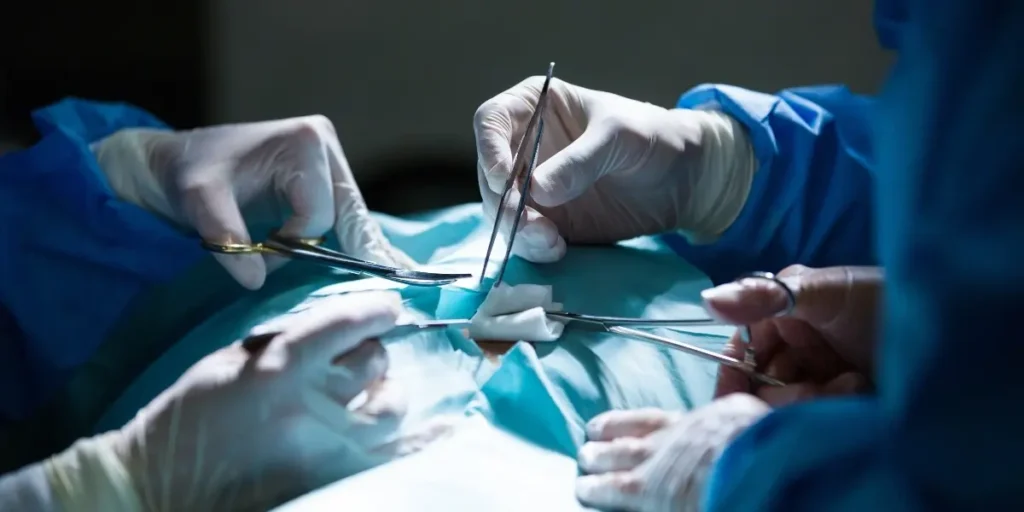
Think of the urethra as a hose that carries urine out of the body. When scar tissue builds up inside this hose, it gets narrower, and urine cannot flow the way it should. This is called a stricture. In some cases, Urethral Reconstructive Surgery may be needed to restore normal urine flow when simpler treatments are not effective.
A stricture can happen anywhere along the tube. It is much more common in men than in women, mainly because of how the male urethra is shaped and how long it is.
What usually causes it:
- An injury to the pelvis or urethra, such as from a road accident. When the stricture comes from a pelvic fracture, doctors call it PFUDD, and it behaves differently from other strictures. Surgeons usually wait about three months after the injury before fixing it, so the area has time to settle and can be checked properly.
- Infections, including some sexually transmitted infections. These used to be a bigger cause in the past and are less common now in many places.
- Past procedures like catheter use, cystoscopy, or prostate surgery
- Skin conditions such as lichen sclerosus, which can slowly narrow the urethra over time
- Hypospadias surgery done in childhood, which sometimes leads to a stricture years later
- Sometimes doctors cannot find any clear reason at all
Signs You Might Have a Stricture
The symptoms depend on how narrow the tube has become and where the problem sits. Watch out for:
- A weak or slow urine stream
- Having to push or strain to start urinating
- Feeling like your bladder never fully empties
- Needing to urinate often or urgently
- Pain or burning while urinating
- The stream spraying or splitting instead of coming out straight
- Urinary infections that keep coming back
If you suddenly cannot urinate at all, this is an emergency. Get medical help right away.
How Doctors Diagnose a Stricture
Your doctor will first ask about your symptoms and history, including any past catheter use, pelvic injury, surgery, or infections.
Tests that may be used:
- Urine flow test: A simple test that checks how fast and how much you urinate. A slow flow points to a blockage.
- Retrograde urethrogram (RUG): An X-ray test where dye is put into the urethra so doctors can see exactly where the narrowing is and how bad it is. This is one of the most useful tests for most patients, though the exact tests used depend on your case.
- Voiding cystourethrogram (VCUG): For strictures caused by a pelvic injury, doctors often do this test along with RUG. Together they show the full picture of the damage from both ends of the tube. It can also be used in some front stricture cases.
- Cystoscopy: A thin camera is passed into the urethra under local numbing to let the doctor see the stricture directly. This helps plan the surgery.
- Ultrasound: In some cases, an ultrasound is used to check how deep the scarring goes, which helps decide which surgery is best.
Getting these tests right matters a lot. The surgery chosen depends on how long the stricture is, where it sits, how much scarring there is, and whether you have had treatment before.
When Surgery Is Needed
Doctors often try simpler fixes first, like stretching the urethra (dilatation) or cutting the scar with a small camera tool (DVIU). But these do not fix the problem for good in most cases. Studies show the stricture tends to come back after these treatments, especially if it is long or complicated.
Urethroplasty, which means surgically rebuilding the urethra, gives the best long term results. Doctors usually recommend it when:
- The stricture keeps coming back after simpler treatments
- It is longer than about two centimeters, though this is a general guide and not a hard rule, since doctors look at length together with location and cause
- It is in the penile urethra or the tip area (fossa navicularis), where simpler treatments do not work well long term
- It is caused by lichen sclerosus, which does not respond well to simpler fixes
- It is causing repeat infections, poor emptying, or is badly affecting your quality of life
For patients who are not good candidates for reconstruction, there is another option called perineal urethrostomy. This creates a new permanent opening for urine to pass through. Current guidelines recognize this as giving good quality of life for the right patients.
Types of Surgery Used
Which surgery is right for you depends on the length and location of the stricture, how much scarring is present, and whether you have had surgery there before.
Excision and Primary Anastomosis (EPA)
Here, the surgeon removes the scarred piece completely and joins the two healthy ends back together. This works best for shorter strictures, usually under two centimeters, in the bulbar part of the urethra (the section closer to the base). It also depends on how easily the urethra can be moved and how much tension the join will have.
This method has a very high success rate, over 90% in published studies, when used for the right kind of stricture. Results can vary based on the patient and the surgeon’s experience. Since no graft is used, the whole repair is your own tissue, which usually heals well without extra donor site problems.
Buccal Mucosa Graft Surgery
When the stricture is too long for a direct join, doctors use a graft to widen or rebuild the narrow section. The inner lining of the cheek, called buccal mucosa, is the material most commonly used for this in front urethral strictures. Guidelines support using cheek or tongue tissue for this kind of graft, based on strong evidence.
The tissue is taken from inside the cheek and used to patch or rebuild the narrowed area. The cheek usually heals within one to two weeks, though some people feel mild discomfort or numbness for longer. There is no visible scar on the outside.
This method works well for strictures in the penile urethra, longer bulbar strictures, and strictures near the tip of the urethra. For patients with lichen sclerosus, cheek tissue is usually preferred over skin from the genital area, since that skin can be affected by the same condition.
Staged Surgery
For very complex or very long strictures, or when heavy scarring makes a one time fix risky, surgeons use a two step approach. In the first surgery, the scarred area is opened up and the graft is placed to prepare the area. The second surgery, where the urethra is fully rebuilt, usually happens three to six months later, once the graft has settled in well. The exact timing depends on how you heal, not a fixed number of months.
This approach takes patience and commitment from the patient, but it gives the best results for the toughest cases.
Flap Surgery
Instead of a free graft, this method uses nearby skin that still has its own blood supply attached. It is used in select cases, mostly for strictures near the tip of the penis, where a cheek graft alone might not give enough coverage.
Surgery for Back Strictures (PFUDD)
Strictures in the back part of the urethra are usually caused by a pelvic injury and are treated very differently from front strictures. Doctors use a step by step repair through the area between the scrotum and anus, rather than a graft, because this kind of injury leaves a gap between the two ends of the tube rather than just scarring inside it. Surgery is usually planned only after the injury has fully settled, and both RUG and VCUG tests are important beforehand to map out the full extent of the damage.
What Happens During the Surgery
The surgery is done under general or spinal anesthesia and usually takes two to four hours, depending on how complex the stricture is.
For strictures in the bulbar area, the surgeon works through a cut between the scrotum and the anus. For strictures nearer the tip, the cut is made along the underside or top of the penis.
Once the repair is done, a catheter is placed to let urine drain out while the area heals, without putting pressure on the new repair.
Most patients stay in the hospital for one to three days after surgery, though this can vary by hospital and by procedure.
Recovering After Surgery
- Catheter: You will go home with a catheter in place while the repair heals. How long you need it depends on the surgery done and what your surgeon decides. For cheek graft surgery, this is often two to four weeks, though it can vary. Your surgeon will tell you the exact timing before your surgery.
- At home: Most people manage the catheter at home without trouble. The clinic will show you how to care for it and what signs to watch for before you leave.
- Activity: Rest for the first two weeks. Avoid heavy lifting, hard exercise, and sitting for long periods in a way that presses on the area. Light walking is fine and even helpful early on.
- Getting back to work: If you have a desk job, you can usually go back within two to three weeks. Physical jobs need more time, and your surgeon will guide you on when it is safe.
- Cheek area: If a cheek graft was used, mild soreness, stiffness, or numbness inside the cheek is normal for the first week and usually settles within a few weeks, though it can take longer for some people. Eating soft foods for the first few days helps.
- Follow up: After the catheter comes out, you will have a flow test and a checkup to make sure everything is working properly. More tests may be needed depending on the results.
How Well Does This Surgery Work
Studies show that urethroplasty done by an experienced surgeon can work well in up to 95% of favorable cases, though this varies a lot depending on where the stricture is, how long it is, what caused it, and whether you have had treatment before. For short bulbar strictures fixed with EPA, success is above 90%. For longer strictures fixed with a cheek graft, success is usually between 80 and 90%.
Success generally means the stricture does not come back and does not need more treatment, though different studies measure this in slightly different ways and follow patients for different lengths of time.
Risks and Complications
This is a specialized surgery, and while risks are low in experienced hands, you should know about them beforehand.
Short term issues can include some pain around the surgery site, swelling, bruising, minor leaking around the catheter (which is common and usually settles on its own but should still be watched by your care team), and infection.
Some specific risks to know about:
Erectile trouble is a known risk after bulbar urethroplasty. How often it happens varies by study, by how the erection was working before surgery, and by which technique is used, but published results generally put it in a low single digit percentage for the standard method, and lower still when a nerve sparing technique is used. The risk is higher for surgery on back strictures, since that area is closer to the nerves that control erections. Your surgeon will talk this through with you personally.
Fluid buildup in the scrotum that needs draining is uncommon.
Wound opening up slightly is also uncommon and usually heals on its own with simple care.
The stricture can come back in a small number of patients, especially with very long or complicated cases. Regular checkups help catch this early if it happens.
Effects on the cheek, like numbness or tightness, are usually temporary and fade over weeks to months.
When to Call the Clinic
Get in touch with Nephro Uro Clinic right away if you notice any of these after surgery:
- Fever above 38 degrees Celsius
- Swelling, redness, or discharge at the wound
- The catheter falls out before it is meant to
- You cannot urinate at all after the catheter is removed
- Heavy bleeding from the wound or urethra
Do not wait to see if these get better on their own. Call early so the team can check you quickly.
About Dr. Ravish at Nephro Uro Clinic
Dr. I. R. Ravish has practiced medicine for over 28 years, with more than 20 years focused on urology. Rebuilding the urethra takes specific training and steady experience to do well. At Nephro Uro Clinic, every patient gets a full checkup before surgery, a clear treatment plan, and proper follow up care afterward.
The clinic is in Jayanagar, Bengaluru, and is easy to reach from Tilaknagar, JP Nagar, BTM Layout, Bannerghatta Road, Koramangala, and other parts of the city. Patients from outside Bengaluru also come here for complex cases and second opinions.
To book a consultation, contact the clinic directly. If you have any past urethrogram reports, flow test results, or cystoscopy findings, bring them along so the first visit can be as useful as possible.