

Reviewed by: Dr. I. R. Ravish, MCh (Urology), Senior Urologist, Nephro Uro Clinic, Bengaluru
Medical Disclaimer This page is for general educational purposes only and does not constitute medical advice. Sterilization is a permanent procedure. Always consult a qualified specialist before making any decision about permanent contraception.
Sterilization surgery is a permanent method of contraception chosen by individuals or couples who have completed their families and want a long-term solution. It is one of the most effective forms of birth control available, though it requires the use of additional contraception until medical clearance is confirmed after the procedure.
At Nephro Uro Clinic in Jayanagar, Bengaluru, Dr. I. R. Ravish performs vasectomy, the standard surgical sterilization procedure for men. He also provides initial counselling and referral coordination for women considering female sterilization. This page focuses primarily on vasectomy, as that is the procedure performed at the clinic, with a brief overview of female sterilization for couples considering their options together.
What Is Sterilization Surgery?
Sterilization surgery permanently prevents pregnancy by blocking the pathway through which eggs or sperm travel. It is intended to be a lifelong decision and should only be considered by those who are certain they do not want biological children in the future.
It is not a decision that should be made under pressure or during a period of uncertainty. Counselling before the procedure is an important part of the process.
Vasectomy: Male Sterilization
Vasectomy is the most common form of male sterilization. It is a minor surgical procedure performed under local anaesthesia in which the vas deferens, the two tubes that carry sperm from the testes to the urethra, are cut, tied, or sealed. Once done, sperm can no longer be released during ejaculation, preventing fertilisation.
Vasectomy is one of the safest and most reliable forms of permanent contraception available. Published effectiveness rates are very high, but this applies only after successful post-procedure semen analysis clearance has been confirmed by a doctor. It does not provide immediate protection from the day of surgery.
Who is a Good Candidate for Vasectomy?
Vasectomy is suitable for men who are certain they do not want to father children in the future. It is typically recommended when:
- A couple has completed their family and both partners are in agreement
- A man has made an independent decision not to have children
- A medical condition makes pregnancy inadvisable for the female partner
- Ongoing contraception is causing health issues or inconvenience
Vasectomy is intended to be a permanent procedure. While reversal is technically possible, success rates decline over time and reversal is not guaranteed. The decision should be made with the clear understanding that it may not be reversible.
How is Vasectomy Performed?
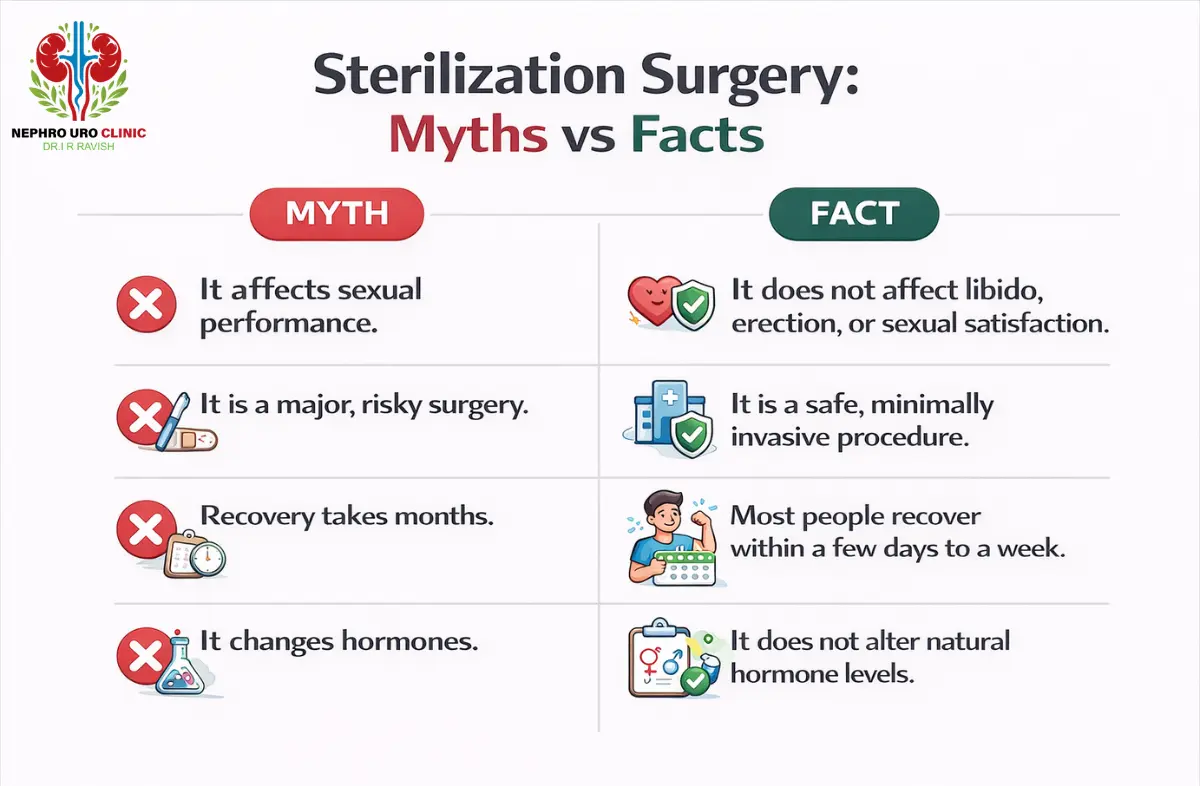
Vasectomy at Nephro Uro Clinic is performed as a day procedure under local anaesthesia. It takes approximately 15 to 30 minutes. The most commonly used modern technique is the no-scalpel vasectomy (NSV), in which a small puncture rather than a traditional incision is made in the scrotum. NSV is widely used in current urology practice and is generally associated with a lower risk of complications compared to conventional incision techniques, though individual outcomes vary.
The vas deferens on each side is identified through the puncture, a small section is removed, and the ends are sealed. The wound heals naturally or with a dissolving suture depending on the technique used.
The patient rests briefly at the clinic after the procedure and is typically ready to go home within one to two hours including preparation and recovery time.
What to Expect After Vasectomy
First 48 hours: Rest at home. Apply ice packs wrapped in cloth to the scrotum for 20-minute intervals. Wear supportive underwear. Avoid lifting, bending, or strenuous activity.
First week: Mild soreness, swelling, and bruising are normal and settle within a few days. Return to work depends on the nature of the job and individual recovery. Desk-based work is often possible within a few days, while physical jobs may require a longer period of rest. Follow your doctor’s specific guidance.
Sexual activity: Can resume when comfortable and as advised by your doctor, typically after approximately one week, but contraception must continue until semen analysis clearance is confirmed.
Semen analysis timing: Vasectomy is not immediately effective because sperm already present in the reproductive tract need to clear. Post-procedure semen analysis is performed after a period of time, typically around 8 to 12 weeks or after a recommended number of ejaculations, as advised by your doctor. The timing and clearance criteria may vary by clinical protocol.
What clearance means: Semen analysis clearance is determined by your urologist based on the result. Most protocols require absence of sperm or, under some guidelines, only rare non-motile sperm under specified criteria. Your doctor will interpret the result and advise accordingly. Contraception must continue until clearance is formally confirmed.
If sperm persist: Persistent sperm on semen analysis can have several causes, including inadequate post-procedure time, recanalization, or technical factors, and always requires clinical interpretation rather than self-assessment. Management depends on the specific finding and is guided by your urologist.
Possible Risks of Vasectomy
Vasectomy is a low-risk procedure. Serious complications are uncommon. Known risks include, based on published urology literature including AUA and EAU guidelines:
- Temporary swelling, bruising, or discomfort in the first few days
- Hematoma, which is blood collecting in the scrotum, reported in approximately 1 to 2% of cases
- Infection at the incision site, reported in less than 1% of cases
- Sperm granuloma, a small lump that can form near the vasectomy site and usually resolves on its own
- Post-vasectomy pain syndrome, which is chronic scrotal discomfort lasting more than three months, estimated to affect 1 to 2% of men in published studies
For a detailed explanation of every vasectomy complication, recovery timeline, and what to do if symptoms arise, see the Complications of a Vasectomy page.
What Vasectomy Does Not Affect
Vasectomy does not affect testosterone levels, sexual drive, erection quality, or the experience of orgasm. The volume and appearance of semen does not change noticeably, as sperm make up only a very small fraction of semen volume.
Vasectomy does not provide any protection against sexually transmitted infections (STIs). Barrier contraception should still be used if there is any risk of STI transmission.
Female Sterilization: A Brief Note
Female sterilization is a gynaecological procedure that falls outside the primary scope of this clinic. At Nephro Uro Clinic, Dr. I. R. Ravish provides initial counselling for women considering sterilization and coordinates referral to a gynaecologist for the procedure where appropriate. Women with co-existing urological concerns such as urinary incontinence or recurrent urinary tract infections can have these assessed at the same clinic.
For detailed information about female sterilization options, couples are encouraged to consult a gynaecologist directly.
Counselling Before Sterilization Surgery in Bangalore
Sterilization is intended to be a permanent decision. Before any procedure is performed, Dr. Ravish provides a detailed consultation to ensure:
- The patient fully understands that vasectomy is intended to be permanent and may not be reversible
- The decision is being made freely and without external pressure
- All alternative contraception options have been discussed
- Any questions about the procedure, recovery, and long-term implications are answered clearly
Written consent: A signed informed consent form is required before the procedure. This documents that the patient has understood the nature of the procedure and its intended permanence. For married individuals, clinical protocol typically includes spousal acknowledgment on consent documentation. Your doctor will advise you on the specific consent requirements at consultation.
Sperm banking: Men who want a precautionary option before proceeding may consider sperm cryopreservation (sperm banking) prior to vasectomy. This preserves sperm that could potentially be used in future assisted reproduction procedures such as IVF or ICSI, though it does not guarantee a successful pregnancy and additional medical steps would be required. If this is something you wish to consider, discuss it with Dr. Ravish at your consultation.
If a patient wants time to consider before confirming, that time is given.
How to Prepare for Vasectomy Surgery in Bangalore
If you have had a consultation and are ready to proceed with vasectomy, preparation is straightforward.
- Arrange for someone to drive you home after the procedure
- Shower on the morning of the procedure
- Wear or bring supportive underwear to wear after the procedure
- Follow Dr. Ravish’s specific instructions regarding any medications to pause before the procedure, particularly blood-thinning medications, as this advice is individualised based on your health history
- Arrange two to three days of light activity at home afterward
When to Contact the Clinic After Vasectomy
Contact Nephro Uro Clinic promptly if you experience any of the following after a vasectomy:
- Fever above 38°C
- Significant swelling or a rapidly enlarging lump in the scrotum
- Pus or discharge from the incision site
- Severe pain not controlled by prescribed pain relief
- Inability to urinate
These symptoms are uncommon but require prompt evaluation.
Sterilization Surgery in Bangalore at Nephro Uro Clinic
Nephro Uro Clinic is located in Jayanagar, Bengaluru, and is accessible to patients from Tilaknagar, JP Nagar, BTM Layout, Bannerghatta Road, Koramangala, Electronic City, and across the city.
Dr. I. R. Ravish has over 28 years of total medical practice, including more than 20 years of dedicated urology experience. Vasectomy is one of the procedures he performs routinely, with a patient-focused approach that prioritises informed consent, clear communication, and careful aftercare.
To book a consultation for vasectomy or to discuss sterilization options, contact the clinic directly.