
When is HoLEP Needed
An enlarged prostate, also called BPH or benign prostatic hyperplasia, is common as men get older. It does not mean cancer. It simply means the prostate has grown and is pressing on the tube that carries urine out of the body.
Your doctor may suggest HoLEP surgery in Bengaluru if you have:
- Frequent or urgent trips to the bathroom, especially at night
- A feeling that your bladder never fully empties
- Repeated urinary tract infections
- Sudden inability to pass urine, needing a catheter
- Symptoms that have not improved with medication, or medication side effects you cannot tolerate
- Bladder stones or early kidney changes caused by long-term blockage
If you live in or around Bengaluru and have been struggling with these symptoms despite trying medicines, this is often the point where doctors start discussing HoLEP as an option.
Who is a Good Candidate, and Who is Not
Prostate size alone does not decide whether HoLEP is right for you. HoLEP can be used across a wide range of prostate sizes, so your doctor will look at your full picture, not just one number.
HoLEP is usually considered for men with:
- Moderate to severe urinary symptoms from BPH
- Little or no improvement from medication
- A prostate of significant size, particularly when it is causing symptoms or blockage
- Urinary retention that needs regular catheterization
- Blood in the urine caused by the enlarged prostate
- Bladder stones linked to BPH
- Repeated infections caused by the blockage
HoLEP may not be suitable if you have:
- An active urinary infection, which needs to be treated first
- A bleeding disorder, or you are on blood thinners without medical clearance
- A heart or lung condition that makes anesthesia unsafe
- A severely narrowed urethra or bladder neck
- Known or suspected prostate cancer that needs a different treatment approach. This is decided based on your urologist’s assessment, including PSA levels, examination, and imaging where needed. A suspicion of prostate cancer does not automatically rule out HoLEP.
How the Surgery is Done
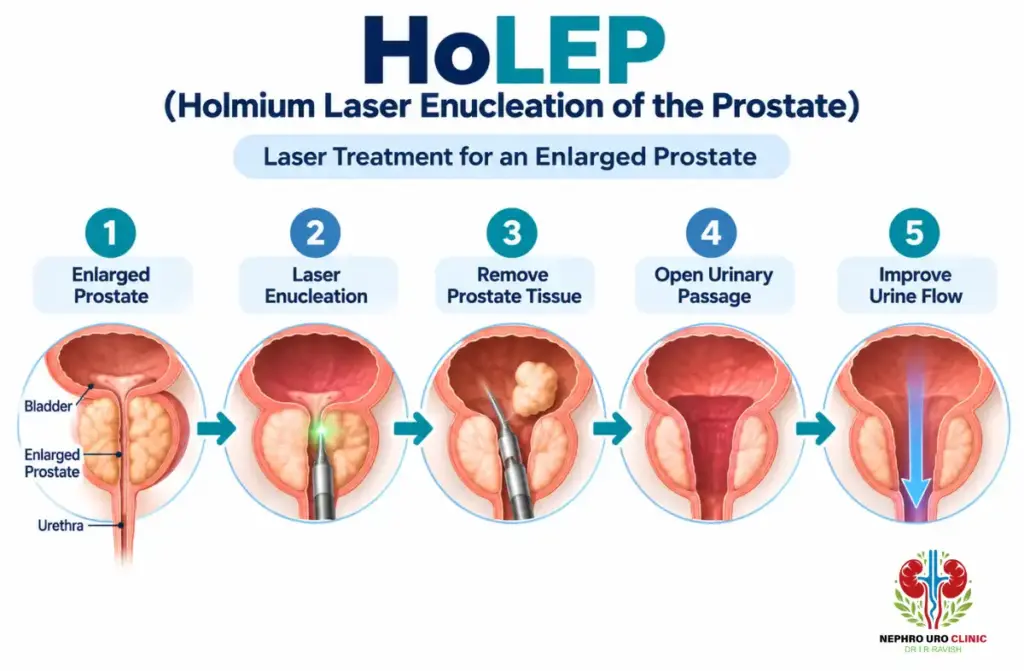
HoLEP is performed under spinal or general anesthesia. Here is what happens, step by step:
- A thin instrument called a resectoscope is passed through the urethra. No cuts are made on the outside of the body.
- A holmium laser is used to carefully separate the enlarged part of the prostate from its outer capsule.
- The freed tissue is pushed into the bladder.
- A tool called a morcellator breaks this tissue into small pieces and removes it through the same passage.
- A catheter is placed to drain the bladder while you heal.
The holmium laser both cuts and seals tissue as it works, which helps limit blood loss during surgery. This is one reason HoLEP is often considered for men on blood thinning medication, though this always needs to be planned carefully with your doctor beforehand.
Getting Ready for Surgery
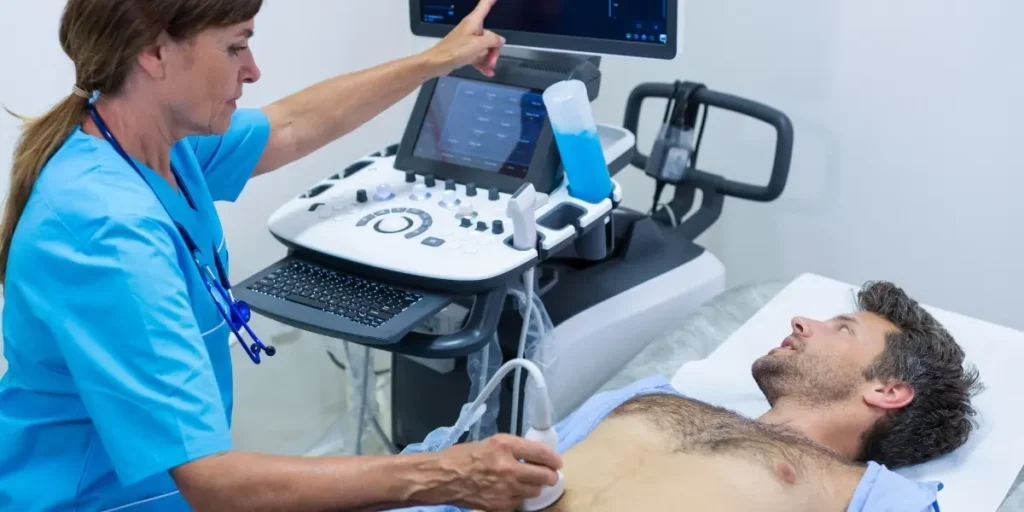
Before HoLEP, Dr. Ravish will review your health history and run some basic checks. This usually includes urine tests to rule out infection, blood tests to check kidney function and clotting, and an ultrasound scan of the prostate. This scan measures the size of your prostate accurately, which helps your doctor decide on the right surgical approach for you.
If you take blood thinning medicine such as aspirin, clopidogrel, or warfarin, your doctor will review it carefully. Depending on the specific medicine, the reason you take it, and your individual bleeding and clotting risk, your doctor may advise continuing it, stopping it for a short period, or adjusting the dose. Never stop blood-thinning medication on your own without medical advice.
Benefits of HoLEP
- Long lasting relief. Improvement in urine flow tends to hold up well over the years.
- No external cuts. The entire procedure is done through the urethra.
- Generally low blood loss, with a bleeding risk that is often lower than some traditional surgical approaches.
- Often a shorter hospital stay, in many cases just a day or two.
- Catheter often removed early, sometimes within 12 to 24 hours, though this depends on urine appearance, bladder function, and your individual recovery.
- Works well across a wide range of prostate sizes, including very large glands over 100 grams, where older methods like TURP become harder to perform.
- A low long-term retreatment rate, meaning it may reduce the chance of needing another prostate procedure later, compared with some other surgical approaches.
Possible Complications
Most men recover from HoLEP without major problems, but as with any surgery, complications can happen. These include:
- Bleeding. Minor bleeding is common and rarely needs treatment. Heavier bleeding is uncommon but should be reported right away.
- Urinary incontinence. Temporary leakage can happen, especially in the early recovery period. It often improves as the pelvic floor and urinary sphincter recover, though some men may notice symptoms for longer than others.
- Urinary tract infection. This is a possible complication, and if it happens, your doctor will usually test your urine before starting the right antibiotic.
- Urethral narrowing. A rare narrowing of the urethra linked to the instruments used.
- Bladder or urinary tract injury. Uncommon, but it can happen during the procedure.
- Blood clots in the bladder. These may need to be flushed out.
- Retrograde ejaculation. This is when semen goes into the bladder instead of leaving the body during climax. It does not affect the ability to have an erection or orgasm, but it can affect fertility, so it is worth discussing before surgery if that matters to you.
Call your doctor promptly if you develop fever, especially with chills or shivering, since this combination can be an early sign of a more serious infection that needs urgent attention. You should also seek care right away for heavy bleeding, inability to pass urine, or pain that is not controlled by your prescribed medication.
Side Effects You Might Notice
Most side effects after HoLEP are mild and settle with time:
- A burning feeling while urinating, which is usually sharpest in the first week
- Mild urgency, frequency, or a lingering burning sensation, which can take another two to four weeks to fully settle as the healing area recovers
- Urge incontinence or minor leakage, which often improves with pelvic floor exercises
- Retrograde ejaculation, as mentioned above
- Light blood in the urine for a few days
- Mild tiredness for a few days, especially in older adults
- Bladder spasms while the catheter is in place, which ease once it is removed
Dr. Ravish’s team will walk you through what to expect before you go home, so none of this catches you off guard.
What Recovery Looks Like
Recovery from HoLEP is usually quicker than older surgery methods, though the exact pace varies from person to person:
- Hospital stay: often just a day or two, but this depends on your recovery and your surgeon’s assessment
- Catheter removal: often early, sometimes within 12 to 24 hours, depending on urine appearance and bladder function
- Light activity: gradually resumed, as advised by your surgeon
- Strenuous activity or heavy lifting: usually avoided for a period your surgeon will recommend
- Return to work: many men with desk-based jobs return relatively quickly, but the right timing depends on your recovery and the nature of your work
- Urine flow: often improves early, though urgency, frequency, or burning can take a few more weeks to fully settle
- Follow-up visits: important to make sure healing is on track
A few things that help during recovery:
- Drink plenty of water to help flush the bladder
- Cut back on caffeine and alcohol in the first few days
- Practice pelvic floor exercises to help regain bladder control faster
Surgery costs can vary quite a bit depending on the hospital, your specific case, and any complications involved. It is best to ask the clinic directly for a personalized estimate rather than relying on general figures you may find online.
HoLEP vs TURP: What is the Difference
Both HoLEP and TURP treat an enlarged prostate, but they work differently. Here is a side by side look:
| Feature | HoLEP | TURP |
| Technique | Holmium laser enucleation | Electrical resection with a loop |
| Prostate size | Suitable across a wide range of sizes, including very large glands | Commonly used for small to medium sized prostates |
| External cuts | None | None |
| Bleeding | Generally low | Can be higher than HoLEP in some cases |
| Average catheter time | Often 12 to 24 hours, varies by patient | Often around 48 to 72 hours, varies by patient |
| Hospital stay | Usually short, often a day or two | Usually short, but often a little longer than HoLEP |
| Long-term retreatment rate | Generally low in long-term studies | Can be somewhat higher in long-term studies for some techniques |
| Long-term symptom relief | Excellent symptom and flow improvement | Excellent symptom and flow improvement |
Both procedures work well for relieving urinary symptoms, and both have excellent long-term track records. HoLEP tends to be preferred for larger prostates or for men who want a shorter catheter time and hospital stay. TURP remains a well proven, reliable option too. The right choice depends on your prostate size, your health, and your doctor’s assessment, so a proper consultation is the best starting point.
Note for the clinic: the catheter time and retreatment rate figures above are commonly cited ranges in urology literature. Please confirm these against current guidelines or your own case data before this table goes live, since exact figures vary between studies.
Does HoLEP Affect Erections
This is a common worry, and a fair one to raise with your doctor. HoLEP surgery in Bengaluru does not usually cause erectile dysfunction, and many men keep their erectile function after surgery. That said, sexual function can be affected by other things too, like age, existing health conditions, medications you take, and the prostate condition itself. If this is a concern for you, bring it up with your urologist before surgery so you know what to expect.
What Happens to PSA After HoLEP
PSA, or prostate specific antigen, is a blood marker often used to monitor prostate health. Since HoLEP removes a significant amount of prostate tissue, your PSA level usually drops after surgery. Your urologist may recommend a follow-up PSA test at some point, and will interpret the result alongside your pre-surgery PSA level, the pathology report from the surgery, and your overall history.
In Summary
HoLEP is a well established, minimally invasive way to treat an enlarged prostate. It works across a wide range of prostate sizes, including very large glands, and many men recover faster than they would with older surgery methods. Like any procedure, it comes with some risks, so it is worth having an honest conversation with your urologist about whether it is the right fit for you.
If you are in Bengaluru and considering HoLEP, Dr. I. R. Ravish at Nephro Uro Clinic in Jayanagar can walk you through your options based on your specific symptoms and prostate size.