Overactive bladder treatment focuses on helping people regain control over sudden urges to urinate, frequent bathroom trips, and unexpected leakage that quietly disrupts daily life. For many, these symptoms creep in gradually, interrupting meetings, sleep, travel, and confidence, until they’re hard to ignore. With the right diagnosis and a personalized plan, these symptoms can usually be managed well. If you’re considering overactive bladder treatment in Bengaluru, this guide covers what overactive bladder actually is, what causes it, and the treatment options available, from simple lifestyle changes to medical procedures.
What Is an Overactive Bladder (OAB)
An overactive bladder is a condition where the bladder muscle contracts involuntarily, causing a sudden and strong urge to urinate. People with OAB often notice frequent bathroom visits, waking at night to urinate, and sometimes leakage before they reach a bathroom. Treatment usually starts with identifying the underlying cause, whether that’s neurological, muscular, or lifestyle related, since the right approach depends on what’s actually driving it.
OAB vs Stress Incontinence: Not the Same Thing
These two get mixed up often, but they’re driven by different mechanisms and treated differently. Overactive bladder is about a sudden, strong urge that’s hard to hold, sometimes with leakage right after the urge hits. Stress incontinence, by contrast, is leakage triggered by physical pressure, coughing, sneezing, laughing, or exercise, without necessarily any urge at all. Some people have a mix of both. Knowing which pattern fits your symptoms helps your doctor pick the right starting treatment, rather than assuming one approach fits everyone.
When to See a Doctor Rather than Just Managing It Yourself
Most OAB symptoms are exactly what they appear to be, and respond well to treatment. But a few symptoms are worth getting checked before assuming it’s simply OAB, since they can also point to something else that needs its own evaluation:
- Blood in the urine, at any point
- Pain in the pelvis, lower back, or while urinating
- Fever, which can suggest an infection rather than plain OAB
- New urgency or frequency that comes on quickly, especially in someone older or with a smoking history, since this combination sometimes needs a closer look to rule out other bladder conditions
None of this means something serious is definitely going on, most of the time it isn’t, but these are the symptoms worth a proper evaluation rather than jumping straight to home remedies.
Causes of Overactive Bladder
- Neurological conditions, such as Parkinson’s disease, multiple sclerosis, or a spinal cord injury, which can disrupt the nerve signals that control bladder function and lead to involuntary contractions.
- Bladder muscle changes, where the muscle itself becomes overactive or overly sensitive, causing frequent urges and sometimes leakage.
- Urinary tract infections, which can irritate the bladder lining and trigger sudden urgency. Treating the infection properly is important, since untreated infections can keep causing OAB-like symptoms.
- Prostate and pelvic floor issues, including an enlarged prostate in men or pelvic floor weakness in women after childbirth, both of which can change the pressure on the bladder.
- Lifestyle and medication factors, such as high caffeine or alcohol intake, certain diuretic medications, or generally high fluid intake, all of which can make symptoms worse.
Symptoms of Overactive Bladder
- Frequent urination, generally more than eight times a day, along with nighttime trips to the bathroom, known as nocturia, which can seriously affect sleep quality.
- Sudden, strong urgency that can strike without much warning, sometimes causing real stress if a bathroom isn’t nearby.
- Urge incontinence, involuntary leakage before reaching a bathroom, which can understandably affect confidence and social life.
- A sense of pressure or discomfort in the lower abdomen.
- Impact beyond the physical symptoms, including anxiety or avoiding situations where a bathroom might not be easily accessible.
How Overactive Bladder is Diagnosed
- A review of your medical history, symptoms, and lifestyle factors that might be contributing.
- A physical examination, including a pelvic or abdominal check, to look for pelvic floor weakness, prostate enlargement, or other structural issues.
- Urine tests, to check for infection, blood, or other abnormalities, and to help determine whether OAB is the primary issue or secondary to something else.
- A bladder diary, where you track fluid intake, how often you urinate, and any urgency or leakage episodes, which helps your doctor spot patterns.
- Specialized tests, such as urodynamic studies or imaging, used in some cases to assess bladder muscle activity, capacity, and nerve function more precisely.
Once this is complete, your doctor puts together a personalized plan, considering medical, lifestyle, and procedural options together, rather than defaulting to one approach for everyone. Cost varies depending on which combination of tests and treatments you need, so it’s worth discussing this directly as your plan takes shape.
Prevention of Overactive Bladder
- Managing fluid intake, moderating caffeine, alcohol, and carbonated drinks, while still drinking enough water at regular intervals.
- Bladder training, using scheduled voiding and gradually delaying urination to help retrain the bladder to hold more over time.
- Pelvic floor exercises, such as Kegels, which strengthen the muscles supporting the bladder and can reduce involuntary leakage, particularly useful for women after childbirth and men after prostate treatment.
- Maintaining a healthy weight, since extra weight adds pressure on the bladder.
- Broader lifestyle habits, including not smoking and managing chronic conditions like diabetes well, both of which support bladder stability over time.
- Regular check-ins with your doctor, so any changes get caught and adjusted for early.
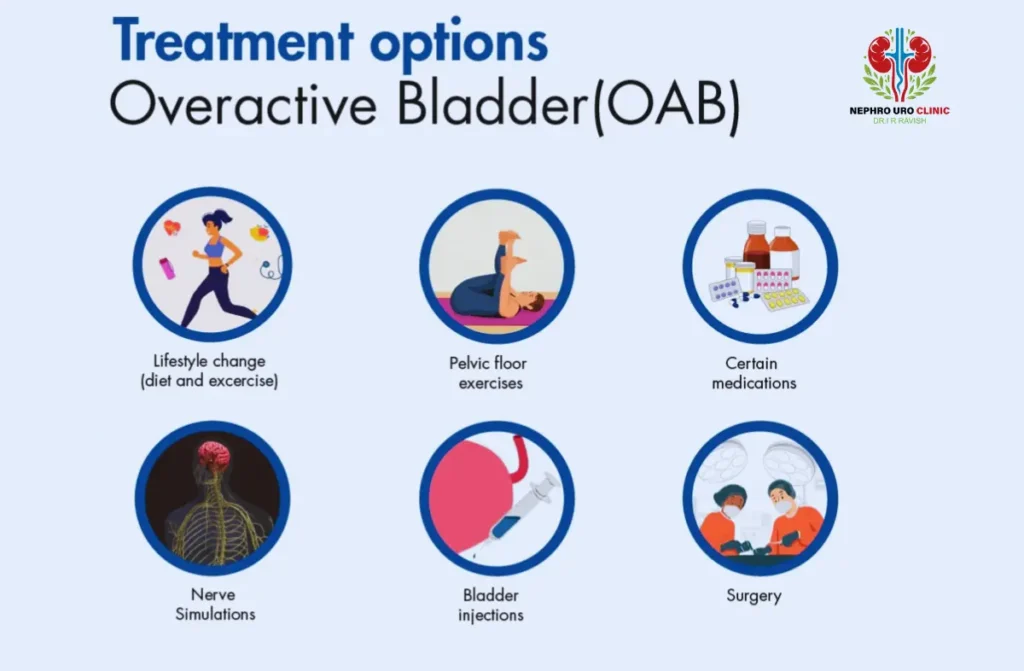
Treatment of Overactive Bladder
Behavioral therapy. Bladder training, scheduled voiding, and urge suppression techniques, combined with lifestyle adjustments like reducing caffeine, can meaningfully cut down urgency and frequency for a lot of people, often as a genuine first step before medication.
Pelvic floor muscle exercises. Strengthening these muscles through Kegel exercises improves bladder support and can reduce leakage, for both men and women.
Medications. Doctors may prescribe antimuscarinics or beta-3 agonists to help calm an overactive bladder muscle. Antimuscarinics commonly cause dry mouth or constipation, and in older adults, they need to be used with a bit more caution, since this class of medication can occasionally affect memory or thinking with longer term use. Beta-3 agonists tend to have a different, usually milder, side effect profile. Which medication fits you depends on your symptoms, other health conditions, and how you tolerate it.
Minimally invasive procedures. When medication and behavioral therapy aren’t enough, options include botulinum toxin (Botox) injections into the bladder wall or nerve stimulation. Botox can offer real, longer lasting relief, but it’s worth knowing upfront that one of its recognized side effects is temporary difficulty fully emptying the bladder, which sometimes means needing to use a catheter for a period afterward. Your doctor should walk you through this trade-off before you decide.
Surgical options. Rarely, and generally only for severe cases that haven’t responded to everything else, surgery may be considered to increase bladder capacity or correct a structural issue affecting bladder control.
A combined approach, behavioral, medical, and procedural where needed, tends to work better than relying on just one strategy, and your doctor should build this around your specific symptoms rather than a standard template.
Home Remedies and Everyday Habits
Alongside medical treatment, a few everyday habits genuinely help manage symptoms:
- A bladder friendly diet, limiting irritants like caffeine, alcohol, artificial sweeteners, and spicy food, and getting enough fiber to avoid constipation, which itself can add pressure on the bladder.
- Even, spaced-out fluid intake, enough to stay hydrated, but reduced in the couple of hours before bed to cut down on nighttime trips.
- Kegel exercises at home, done consistently, since they can be practiced discreetly almost anywhere.
- Staying active and managing weight, with gentle activities like walking, swimming, or yoga supporting overall bladder function.
- Stress reduction, since stress and anxiety can genuinely make urgency worse, and techniques like deep breathing or gentle yoga can help.
- Cutting back on smoking and other habits that irritate the bladder.
In Summary
Overactive bladder can meaningfully affect daily life, but it’s a well understood, treatable condition with several genuine options, from simple habit changes through to medication and procedures for symptoms that don’t respond to the basics. Getting a proper evaluation first, rather than assuming every case is the same, means you end up with a plan that actually fits your symptoms and their underlying cause.
Read also Bladder Pain Syndrome in Bengaluru.