If you have been told your bladder pain is “just stress” or “just a UTI that won’t fully clear,” but the discomfort keeps coming back despite treatment, you may be dealing with something different. Bladder pain syndrome in Bengaluru, also called interstitial cystitis, is a real and treatable condition. It can be frustrating to live with because symptoms may go unrecognized for months or even years before the right diagnosis is made.
This pattern is common among people who eventually receive a diagnosis of bladder pain syndrome. Patients often arrive after multiple rounds of antibiotics for infections that test negative, convinced something is being missed. Often, something is. Bladder pain syndrome does not show up on a standard urine test, which is exactly why it gets overlooked.
This page walks through what bladder pain syndrome actually is, what causes it, how it gets diagnosed properly, and what treatment looks like in practice for patients seeking bladder pain syndrome care in Bengaluru.
What Bladder Pain Syndrome Actually Is
Bladder pain syndrome is chronic pain or pressure felt in the bladder and pelvic area, often alongside an urgent or frequent need to urinate, that persists without an infection driving it. Unlike a urinary tract infection, there is no bacteria to clear. The bladder itself becomes the source of ongoing discomfort, sometimes due to changes in its lining, sometimes due to nerves in the area becoming overly sensitive, and often because of a combination of factors that are not fully understood even by specialists.
This is part of why the condition frustrates people so much before diagnosis. Tests come back normal, antibiotics do not help because there is nothing to treat with antibiotics, and the pain is dismissed as something psychological when it is very much physical.
What Causes It
There is rarely one single cause behind bladder pain syndrome, and that is part of what makes it tricky to treat. A few patterns show up often.
The bladder lining may be thinner or more permeable than normal. In some people, the protective layer inside the bladder wall does not do its job as well as it should. This allows substances in urine that would normally cause no issue to seep through and irritate the bladder wall directly, triggering pain and urgency even though there is no infection present.
The nerves in the bladder and pelvis can become overly sensitive. In some cases, the nerve signals between the bladder and brain become amplified, so even a small amount of urine in the bladder feels like pressure or pain. This nerve sensitization is one reason bladder pain syndrome can feel disproportionate to what is actually happening physically inside the bladder.
Past infections or pelvic trauma sometimes leave lasting irritation. Even after an original infection or injury has fully healed, some residual inflammation or nerve sensitivity can remain behind, keeping symptoms going long after the original cause is gone.
Certain foods and drinks make symptoms worse for many people. Caffeine, alcohol, carbonated drinks, and acidic foods are common triggers, though which specific foods cause flares varies a great deal from person to person. This is an important point: there is no single universal “bladder pain syndrome diet” that works for everyone, which is why tracking your own triggers matters more than following a generic list.
Recognizing the Symptoms
Bladder pain syndrome can look different from person to person, but a few patterns are common.
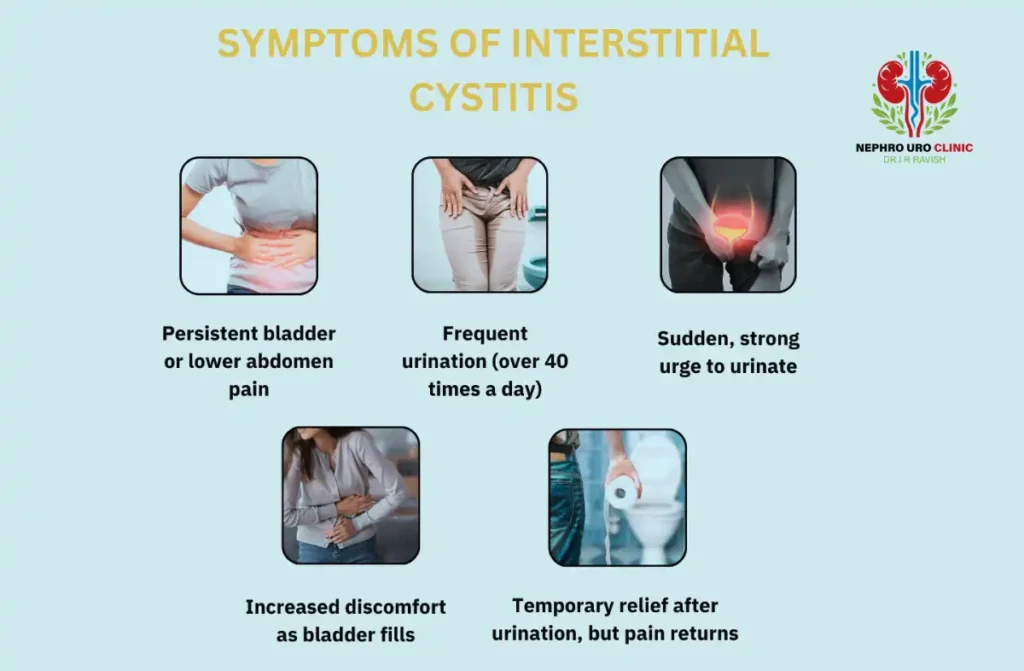
Ongoing pain or pressure in the pelvis or lower abdomen, which may ease briefly after urinating, only to build up again as the bladder fills.
A frequent and sometimes urgent need to urinate, often passing only small amounts each time, including multiple trips to the bathroom overnight that disrupt sleep.
A burning or stinging feeling that resembles a UTI, but persists even when urine tests come back clear and antibiotics have already been tried.
Pain during sex, which can understandably affect intimacy and relationships, and is a symptom many patients feel uncomfortable bringing up but should mention to their doctor directly.
Discomfort that builds specifically as the bladder fills, sometimes leading people to drink less water than they should to avoid triggering pain, which can create its own problems over time.
If several of these sound familiar, especially after ruling out infection, it is worth raising bladder pain syndrome specifically with your doctor rather than continuing to treat it as a UTI that will not clear.
How It Gets Diagnosed
There is no single definitive test for bladder pain syndrome. Diagnosis relies on a careful process of ruling out other conditions and recognizing a consistent pattern of symptoms. This is also exactly why diagnosis often takes longer than patients expect: several other conditions can look similar on the surface, and each needs to be reasonably excluded first.
Conditions That Can Mimic Bladder Pain Syndrome
- Recurrent urinary tract infections
- Overactive bladder
- Endometriosis
- Bladder stones
- Bladder cancer
- Pelvic floor dysfunction
Most of these are far more common than bladder pain syndrome itself, which is part of why doctors work through them first rather than jumping straight to a bladder pain syndrome diagnosis. Bladder cancer in particular is rare, but it is included here because it can occasionally present with similar urgency and discomfort, and ruling it out properly is a standard, sensible part of a thorough evaluation rather than a sign that anything is seriously wrong.
A detailed history and physical exam come first. Your doctor will ask about when symptoms started, what makes them better or worse, and what other conditions have already been ruled out or treated. This conversation matters more than people expect, since the symptom pattern itself is one of the most useful diagnostic tools available.
A urine test and culture rule out infection. This step is essential, since bladder pain syndrome is only considered once infection has genuinely been excluded, not just treated empirically with another round of antibiotics.
Further testing is added selectively, not automatically. For many patients, a careful history plus a clear urine test is enough to move forward with a working diagnosis and start treatment. Cystoscopy, where a thin camera examines the inside of the bladder, and urodynamic studies, which measure how the bladder stores and releases urine, are valuable tools, but current clinical guidance reserves them for situations where something else needs to be ruled out, rather than treating them as mandatory steps for every patient. A doctor will explain clearly if and why additional testing makes sense in a specific case.
Treatment That Actually Helps
There is no single cure for bladder pain syndrome, and most treatment plans combine a few approaches rather than relying on one. It also helps to set expectations early: improvement is usually gradual, often over weeks rather than days, and the goal is meaningful symptom control rather than complete elimination of all discomfort.
Diet and trigger tracking come first for most patients. Keeping a simple log of food and drink alongside symptoms over a few weeks often reveals personal triggers faster than guessing. Common culprits include caffeine, alcohol, and acidic foods, but the specific list is different for everyone, which is why a generic “avoid this” list is less useful than a tracked personal pattern.
Bladder training can help retrain urgency over time. Gradually extending the time between bathroom visits, done carefully and at one’s own pace, can help the bladder tolerate more without triggering the same urgency response. This works best when guided by a specialist rather than attempted alone, since pushing too fast can backfire.
Pelvic floor physical therapy helps many patients, but it needs the right kind. This is an important distinction: standard Kegel exercises, which strengthen the pelvic floor, are generally not recommended for bladder pain syndrome, since many patients already have a tight, overactive pelvic floor rather than a weak one. The more useful approach is usually relaxation-focused physical therapy with a specialist trained specifically in pelvic floor conditions, not generic strengthening exercises.
Medications can ease pain and reduce flare frequency. Oral medications and bladder instillations, where a soothing solution is placed directly into the bladder through a thin catheter, are both options depending on symptom severity. A doctor will walk through what fits a given case rather than starting with the most aggressive option by default.
Stress management genuinely affects symptom severity. This is not a suggestion that stress causes bladder pain syndrome, it does not, but chronic stress can amplify nerve sensitivity and worsen flares. Simple practices like regular sleep, gentle movement, and stress reduction techniques often complement medical treatment meaningfully.
For symptoms that do not respond to the above, further options exist. Procedures such as cystoscopic hydrodistention or nerve stimulation are available for patients with more persistent symptoms, depending on how someone has responded to initial treatment.
What to Expect Going Forward
Bladder pain syndrome tends to be a condition people manage rather than one that simply resolves and disappears. That is not the most comforting sentence to read, but it is the honest one, and most patients do reach a place of real, stable improvement once the right combination of treatment is found for them specifically.
What helps most is not chasing a single fix, but working with a specialist who adjusts the plan over time, rather than treating every flare the same way the first one was treated.
When to See a Specialist
If recurring bladder discomfort does not show up as an infection on testing, especially if it has been going on for more than a few months, it is worth seeing a urologist rather than continuing to manage it alone or assuming it will eventually resolve by itself.
At Nephro Uro Clinic in Jayanagar and Sagar Hospitals in Tilaknagar, patients with bladder pain syndrome undergo a structured evaluation to rule out other causes and develop an individualized treatment plan based on their symptoms and needs.
The Bottom Line
Bladder pain syndrome is real, it is treatable, and being dismissed or misdiagnosed for months is unfortunately common before patients find the right care. If bladder symptoms keep returning despite clear tests and finished antibiotic courses, that pattern deserves a proper look, not another prescription for an infection that was never actually there.
Read also Genitourinary Cancer Surgeries in Bengaluru.