A sudden sharp pain in the lower back or side can be alarming, and in many cases, it points to a kidney stone. The intensity often depends on the size of the stone and whether it is blocking urine flow. That is why understanding stone size becomes important. It helps you understand what your body is going through and what to expect next. When you look at a kidney stone size chart in mm, you can relate size with pain, risk, and treatment options. Some stones pass quietly, while others need medical care. This guide breaks it down in a simple way so you can make informed decisions without confusion or delay.
What Are Kidney Stones?
Kidney stones, medically known as nephrolithiasis, are solid, crystal-like deposits that form within the renal system. They develop when your urine becomes overly saturated with minerals and salts such as calcium, oxalate, and uric acid, causing them to stick together and crystallize. This often happens due to chronic dehydration or metabolic imbalances. Once these crystals form, they can grow into various shapes and sizes.
While some stones remain stationary in the kidney without causing any symptoms, others migrate into the ureter (the narrow tube connecting the kidney to the bladder). This movement often triggers intense pain and blocks the flow of urine. Understanding the scale of these stones helps explain the mechanical challenge your body faces; while a microscopic crystal passes unnoticed, a larger mass acts like a plug in your urinary tract, leading to pressure and discomfort.
Kidney Stone Size Chart in mm
Understanding stone size is important because it directly affects symptoms and treatment. A well-structured kidney stone size chart in mm and treatment helps patients and doctors decide the next steps. Smaller stones often pass on their own, while larger stones may require medical procedures. Below is a simple chart that explains size, chances of passing, and typical treatment approaches.
| Stone Size (mm) | Size Comparison | Symptoms | Time to Pass | Common Treatment |
| < 2 mm | Grain of sand | Often no symptoms or only mild discomfort | A few days to 1–2 weeks | Hydration, pain relief if needed, observation |
| 2–4 mm | Small seed / grain | Mild to moderate pain, burning urination possible | About 1–2 weeks | Fluids, pain relief, observation |
| 5–7 mm | Green pea | Moderate to severe pain, burning urination, possible blockage | Often 2–6 weeks if it passes; some need intervention | Medication to help passage, pain relief, possible procedure |
| 8–10 mm | Marble | Severe pain, blockage more likely, nausea or vomiting possible | Unlikely to pass naturally | Shock wave therapy or ureteroscopy, depending on location and symptoms |
| > 10 mm | Large stone | Severe pain, obstruction, vomiting, infection risk if blocked | Very unlikely to pass naturally | Usually needs a procedure such as ureteroscopy or other surgical removal |
This chart gives a quick and practical understanding of what to expect based on size.
Kidney Stone Size Comparison (Real-Life Objects – Indian Context)
- Less than 2 mm – Like a grain of rava , often passes without symptoms
- 2–4 mm – Similar to a mustard seed , may cause mild discomfort
- 5–7 mm – About the size of a green pea , can cause noticeable pain
- 8–10 mm – Comparable to a small marble or channa , usually needs medical help
- More than 10 mm – Larger than a big marble or amla, often requires surgery
Thinking in familiar everyday objects makes it easier to understand stone size and what your body might be going through.
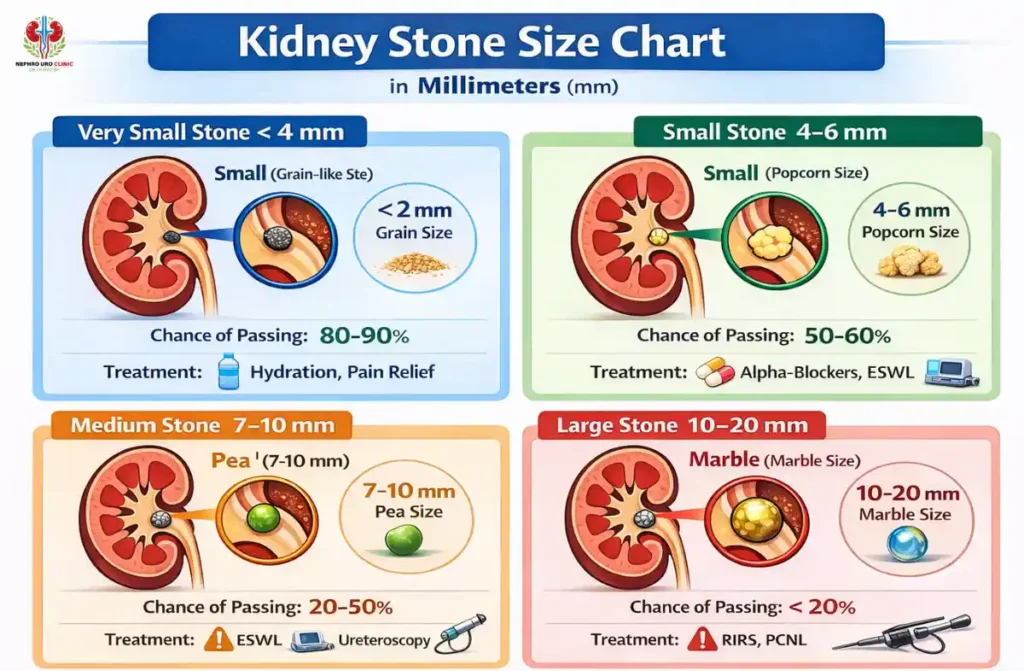
Kidney Stone Size Categories Explained
Kidney stones are usually grouped based on their size because this helps predict how they behave. Understanding stone size clearly shows the categories and their outcomes.
Small stones, usually below 5 mm, often pass naturally without much difficulty. Medium stones, between 5 and 7 mm, may pass but can cause pain and may need medication. Larger stones, above 8 mm, are less likely to pass and often require treatment.
Key categories include:
- Small stones (<5 mm): High chance of passing naturally
- Medium stones (5–7 mm): May need medical support
- Large stones (8–10 mm): Often require procedures
- Very large stones (>10 mm): Usually need surgical removal
This structured approach helps patients understand risk levels and treatment decisions more clearly.
Symptoms Based on Kidney Stone Size
The symptoms of kidney stones can vary widely depending on their size and location. Smaller stones may go unnoticed, while larger stones can cause severe discomfort. A kidney stone size chart in mm and treatment helps connect symptoms with size for better understanding.
Many patients first notice pain when the stone begins to move. The intensity often increases as the stone grows larger or blocks urine flow.
Common symptoms include:
- Mild discomfort or no symptoms in small stones
- Sharp pain in the lower back or side
- Pain while passing urine
- Blood in urine
- Nausea or vomiting in larger stones
- Frequent urge to urinate
Recognizing these symptoms early and relating them to stone size can help in seeking timely care.
Treatment Based on Kidney Stone Size
Treatment for kidney stones depends mainly on size, symptoms, and location. Understanding stone size helps guide the treatment plan and avoid unnecessary delays.
Small stones usually do not need procedures. Drinking enough water and taking pain relief medication may be enough. However, as the size increases, treatment becomes more structured.
Treatment options include:
- Small stones (<5 mm): Increased fluid intake, pain relief, monitoring.
- Medium stones (5–10 mm): Medication to relax the urinary tract, possible shock wave therapy.
- Large stones (>10 mm): Procedures like laser treatment or minimally invasive surgery.
A kidney stone size chart in mm and treatment clearly shows when medical intervention is needed. Early treatment not only reduces pain but also prevents complications such as infection or kidney damage.
How Long Does It Take to Pass a Kidney Stone?
The time it takes to pass a kidney stone depends on its size and the individual’s health. Smaller stones may pass within a few days to a couple of weeks. Medium-sized stones can take longer and may require medication to assist the process. Larger stones rarely pass on their own and often need treatment.
Using a size-based reference helps estimate this timeline more accurately. For example, stones below 4 mm usually pass faster, while those above 6 mm may take several weeks or need intervention. This gives patients a realistic idea of what to expect and reduces anxiety during the waiting period.
What Size Kidney Stone Is Dangerous?
Not all kidney stones are dangerous, but the risk increases as the size grows. Stones smaller than 5 mm are usually manageable and often pass on their own. However, once the size crosses 6–8 mm, the chances of blockage increase. This can lead to severe pain and difficulty passing urine.
Understanding stone size helps identify these risk levels clearly. Stones larger than 8 mm are more likely to get stuck in the urinary tract, and delaying treatment can lead to infection or pressure on the kidney. Very large stones, especially those above 10 mm, almost always require medical intervention. Recognizing this early helps patients understand when a stone is no longer safe to ignore and needs prompt attention.
When Should You See a Doctor Immediately?
- Severe or unbearable pain
- Fever or chills
- Blood in urine
- Difficulty passing urine
- Persistent nausea or vomiting
- Pain that does not improve with medication
These signs indicate that the stone may be causing complications. Early medical attention can prevent serious issues and ensure proper treatment.
Types of Kidney Stones and Their Significance
Kidney stones are not all the same. Their type depends on what they are made of, and this can influence treatment and prevention.
- Calcium stones: Most common, often linked to diet and hydration
- Uric acid stones: Associated with high protein intake
- Struvite stones: Usually related to infections
- Cystine stones: Rare and linked to genetic conditions
Understanding the type of stone adds another layer to the evaluation, helping doctors choose the best treatment plan.
Risk Factors that Increase Kidney Stone Size
Kidney stones are becoming more common worldwide, affecting millions of people every year. Studies show that up to 1 in 11 people may develop a stone at some point in life, making it a significant health concern globally. Certain habits and conditions can increase the risk of larger kidney stones. When these factors are present, stones may grow faster and become more difficult to treat.
- Low water intake
- High salt or protein diet
- Obesity
- Family history of kidney stones
- Certain medical conditions
Understanding these risks helps in monitoring stone growth and taking early action.
Prevention Tips to Avoid Large Kidney Stones
- Drink enough water throughout the day
- Reduce salt intake
- Limit excessive protein consumption
- Include fresh fruits and vegetables
- Avoid holding urine for long periods
- Follow medical advice if you have a history of stones
Preventing stones is always better than treating them. A simple lifestyle approach can reduce the chances of stones growing large enough to need intervention.
Conclusion
Kidney stones can vary greatly in size, and this difference plays a major role in symptoms, treatment, and recovery. Understanding stone size helps you know when a stone may pass naturally and when medical care is needed. Referring to a kidney stone size chart in mm makes it easier to connect your symptoms with the right action. The key takeaway is simple: do not ignore persistent pain or warning signs. Early attention can prevent complications and lead to faster recovery.