
Medically reviewed by Dr. I. R. Ravish , Consultant Urologist, Nephro Uro Clinic
Pelvic floor dysfunction happens when the muscles and connective tissue supporting the bladder, uterus or prostate, and rectum become weak, tight, or simply uncoordinated. It can show up as urinary leakage, chronic pelvic pain, or trouble with bowel movements, and it affects both men and women. If you’re looking for pelvic floor dysfunction treatment in Bengaluru, this guide covers what causes it, how it’s diagnosed, and what treatment involves, along with which specialist handles each part of it.
What is Pelvic Floor Dysfunction
Pelvic floor dysfunction occurs when the muscles supporting the pelvic organs aren’t working properly, whether they’re too weak, too tight, or just not coordinating well. This can affect bladder, bowel, and sexual function, causing discomfort, leakage, or ongoing pain. Childbirth, surgery, aging, and certain lifestyle factors can all contribute. Treatment generally focuses on restoring muscle balance through targeted exercises, physiotherapy, and a plan built around your specific symptoms.
Which Specialist Treats Which Part of This
This is worth understanding upfront, since pelvic floor dysfunction spans more than one specialty. A urologist, like Dr. Ravish, is the right starting point when the main issue is urinary, leakage, urgency, incomplete emptying, or pelvic pain connected to bladder function, and urologists also see a fair amount of male pelvic floor dysfunction, particularly after prostate surgery.
When pelvic organ prolapse is the main concern, a gynecologist or urogynecologist, a specialist trained specifically at that overlap, is usually the more direct fit. When bowel symptoms like fecal incontinence are the primary issue, a colorectal specialist may be involved too. A pelvic floor physiotherapist often works alongside whichever doctor you see, since the physical retraining part of treatment is common across nearly all these presentations. Your urologist can help direct you to the right additional specialist if your case needs one.
Symptoms of Pelvic Floor Dysfunction
- Urinary issues, including frequent urination, urgency, or leakage caused by muscles that aren’t controlling the bladder as they should.
- Bowel problems, such as constipation, straining, or trouble fully emptying the bowel, when the pelvic floor muscles are too tight or poorly coordinated.
- Pelvic or lower back pain, ongoing discomfort in the pelvis, hips, or lower back that can point to muscle tension or imbalance.
A quick safety note: sudden, severe symptoms, especially new numbness in the groin or inner thighs alongside a sudden loss of bladder or bowel control, need urgent same-day medical attention rather than a routine appointment. This combination is uncommon, but when it happens, it needs to be checked right away.
Types of Pelvic Floor Dysfunction in Women
- Urinary incontinence, where weakened pelvic floor muscles lead to leakage during coughing, sneezing, or exercise.
- Pelvic organ prolapse, where weakened pelvic support allows the bladder, uterus, vaginal walls, or rectum to bulge into or toward the vaginal canal. This is generally best managed by a gynecologist or urogynecologist, sometimes alongside a urologist if urinary symptoms are also present.
- Chronic pelvic pain, from tight or overactive pelvic floor muscles causing ongoing discomfort.
- Sexual dysfunction, where pelvic muscle issues contribute to pain during intercourse, reduced sensation, or difficulty with orgasm.
Pelvic Floor Dysfunction in Men
Men experience this too, and it’s an area urologists see fairly often, particularly:
- Post-prostatectomy incontinence, urinary leakage following prostate surgery, which pelvic floor physiotherapy and targeted exercises can meaningfully improve for many men.
- Chronic pelvic pain syndrome, ongoing pelvic or perineal discomfort, sometimes originally thought to be a prostate infection, that’s often connected to pelvic floor muscle tension rather than an ongoing infection.
- Erectile or ejaculatory changes, which can sometimes be connected to pelvic floor muscle function and are worth mentioning to your urologist directly.
Causes of Pelvic Floor Dysfunction
- Childbirth and pregnancy, since vaginal delivery, prolonged labor, or multiple pregnancies can stretch and weaken the pelvic floor.
- Aging and hormonal changes, particularly reduced estrogen during menopause, which can reduce muscle tone and elasticity over time.
- Surgery or trauma, including hysterectomy or prostate surgery, or pelvic injury, any of which can affect muscle function or nerve signaling in the area.
- Lifestyle factors, such as chronic constipation, obesity, regular heavy lifting, or poor posture, all of which can strain the pelvic floor over time.
- Neurological conditions, such as multiple sclerosis or a spinal cord injury, which can impair coordination of the pelvic floor muscles.
How Pelvic Floor Dysfunction is Diagnosed
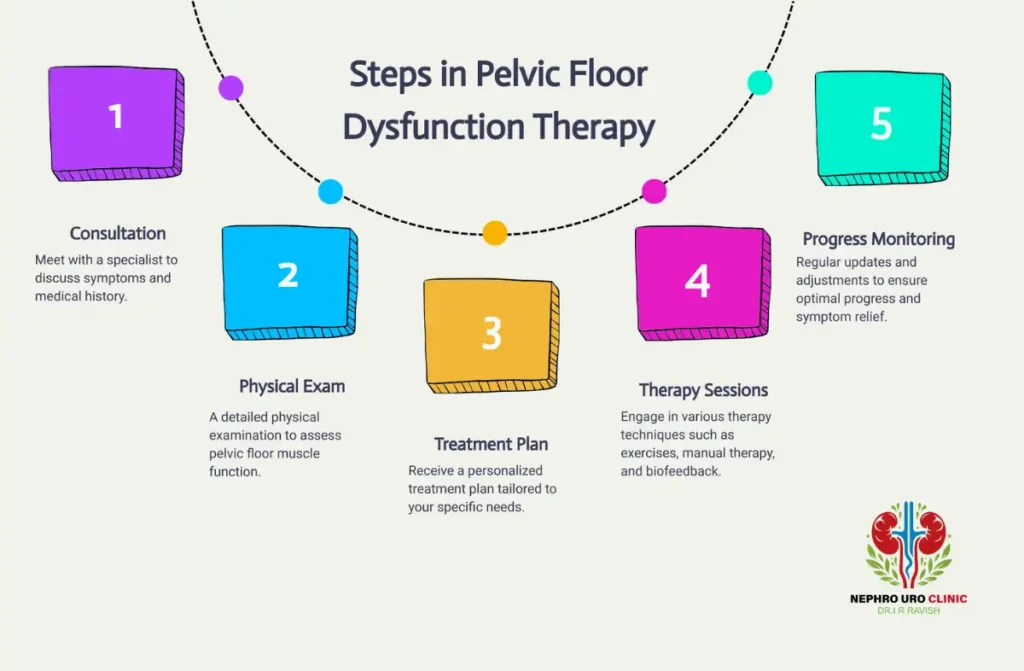
- A detailed history and symptom review, covering urinary, bowel, and pelvic symptoms alongside your broader medical history, to understand your specific situation before planning anything.
- A physical examination, evaluating muscle tone, strength, and coordination to identify areas of weakness or tightness.
- Imaging or specialized tests, such as ultrasound, MRI, or urodynamic studies, used in some cases to assess organ support, muscle function, or nerve activity more precisely.
- Functional assessments, including biofeedback, electromyography, or postural analysis, to measure how the pelvic floor is actually functioning day to day.
Treatment for Pelvic Floor Dysfunction
Pelvic floor exercises. Strengthening exercises such as Kegels can help when the pelvic floor is weak, while relaxation and coordination exercises tend to be more appropriate when the muscles are overly tight or poorly coordinated, since Kegels aren’t the right fit for that pattern and can sometimes make symptoms worse if done incorrectly. A pelvic floor physiotherapist can help figure out which approach actually matches your situation.
Non-surgical pelvic floor therapy. Techniques such as biofeedback, selected forms of electrical stimulation, and manual therapy may be used in some patients, depending on whether the pelvic floor muscles are weak, overactive, or poorly coordinated. These aren’t a standard first step for everyone, and a physiotherapist working alongside your doctor will typically decide what fits your specific pattern.
Lifestyle and habit changes. Addressing chronic constipation, posture, and heavy lifting habits helps prevent ongoing strain on the pelvic floor and supports whatever other treatment you’re doing.
Working with the right specialist team. Since this condition often involves more than one specialty, getting the right combination, a urologist, a gynecologist or urogynecologist, a physiotherapist, sometimes a colorectal specialist, can provide more appropriate, coordinated care than seeing a single provider for a condition that spans several systems.
Possible Complications If Left Untreated
- Ongoing urinary problems, including persistent leakage, urgency, or incomplete bladder emptying.
- Bowel dysfunction, such as constipation, straining, or fecal incontinence.
- Pelvic organ prolapse, which can worsen over time if the underlying muscle weakness isn’t addressed, sometimes leading to a noticeable sense of pressure or a visible bulge.
- Sexual dysfunction and pain, which can affect intimacy and quality of life if left unaddressed.
Can Pelvic Floor Dysfunction Be Prevented
Not every case can be prevented, some develop from childbirth, surgery, or aging in ways that are hard to avoid entirely, but a few habits can help reduce the strain on your pelvic floor:
- Avoid chronic constipation and excessive straining during bowel movements
- Maintain a healthy weight where that’s appropriate for you
- Use proper technique when lifting heavy objects, bracing correctly rather than straining through the pelvic floor
- Do pelvic floor exercises under professional guidance rather than guessing at technique on your own
- Get persistent urinary or bowel symptoms checked rather than working around them indefinitely
- Follow your rehabilitation guidance closely after childbirth or pelvic surgery, since this window matters for long-term recovery
In Summary
Pelvic floor dysfunction can affect bladder, bowel, and sexual health in ways that genuinely disrupt daily life, but it’s a well understood and treatable condition, for both men and women. Getting evaluated early, and by the right combination of specialists for your specific symptoms, may be more appropriate than trying to guess which single doctor to see and working through it alone.