Urethral stricture treatment focuses on restoring the normal flow of urine when the urethra becomes narrowed due to scarring or injury. This condition often develops quietly, starting with mild discomfort and gradually turning everyday urination into a stressful experience. When left unaddressed, it can affect bladder health, kidney function, and overall quality of life.
For individuals seeking expert care, Urethral Stricture Treatment in Bengaluru offers access to advanced diagnostic tools, experienced specialists, and tailored treatment approaches designed to bring lasting relief and confidence back into daily living.
What is a Urethral Stricture?
A urethral stricture is a condition in which the urethra becomes abnormally narrow due to scar tissue formation, restricting the normal flow of urine from the bladder. This narrowing can develop gradually, often going unnoticed until symptoms begin to interfere with daily routines. Over time, the blockage may place strain on the bladder and kidneys, increasing the risk of infections and retention.
Types of Urethral Stricture
- Anterior urethral stricture: This type affects the portion of the urethra closest to the penis and is commonly linked to infections, catheter use, or minor trauma.
- Posterior urethral stricture: Posterior strictures occur deeper in the urinary tract, usually following pelvic fractures or prostate-related procedures. These strictures are often more complex and may require advanced planning.
- Short-segment stricture: A short-segment stricture involves a limited area of narrowing and may respond well to minimally invasive approaches. Early identification allows targeted treatment, reducing the chance of recurrence and prolonged discomfort.
- Long-segment or recurrent stricture: Long or repeatedly recurring strictures involve extensive scarring and often demand reconstructive techniques.
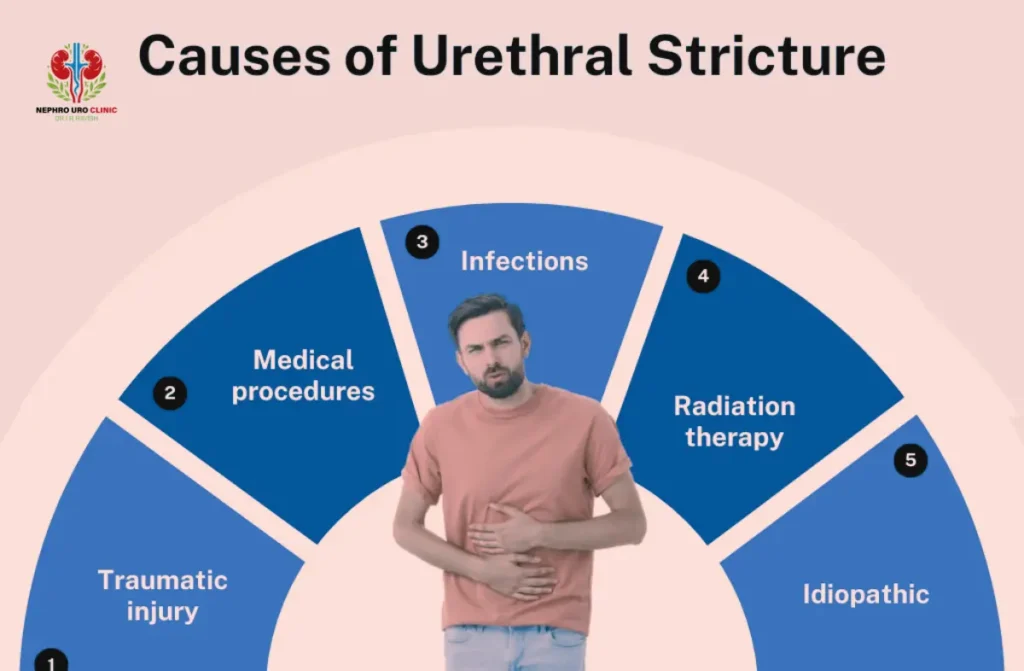
Causes of Urethral Stricture
- Previous medical procedures or catheter use: Repeated catheterization or endoscopic procedures can irritate the urethral lining, leading to scar formation over time. Many individuals seeking Urethral Stricture Treatment in Bengaluru report symptoms that appear months or even years after such interventions.
- Trauma or injury to the pelvic region: Accidents, falls, or sports-related injuries affecting the pelvis can damage the urethra and trigger scarring during healing.
- Infections of the urinary tract or sexually transmitted infections: Untreated or recurrent infections can inflame the urethra, gradually causing narrowing.
- Previous prostate or urethral surgery: Surgical manipulation near the urethra may alter tissue integrity, increasing the risk of stricture formation.
Symptoms of Urethral Stricture
- Weak or interrupted urine stream: A noticeable reduction in urine flow or a stream that stops and starts is often one of the earliest signs. Many individuals consider Urethral Stricture Treatment in Bengaluru when this symptom begins to affect daily comfort and confidence.
- Straining or discomfort during urination: Narrowing of the urethra forces the bladder to work harder, leading to straining and a burning or painful sensation.
- Frequent urge to urinate with incomplete emptying: Even after passing urine, a lingering feeling of fullness may remain due to trapped urine.
- Recurrent urinary infections or sudden retention: Repeated infections or the inability to pass urine suddenly indicate significant blockage.
Diagnosis of Urethral Stricture
- Detailed medical history and physical evaluation: Diagnosis often begins with a careful discussion of urinary symptoms, past procedures, injuries, or infections.
- Urine flow and bladder assessment tests: Tests that measure urine flow rate and post-void residual urine help identify obstruction levels.
- Imaging and endoscopic evaluation: Procedures such as urethrograms or cystoscopy allow direct visualization of the narrowed segment.
- Assessment of stricture length and complexity: Understanding whether the stricture is short, long, or recurrent helps tailor care.
Treatment of Urethral Stricture
- Urethral dilation and endoscopic procedures: Mild or short strictures may be managed by gradually widening the narrowed area using specialized instruments.
- Internal urethrotomy: This procedure involves making a precise incision in the scar tissue to improve urine flow. It is often recommended for select cases and forms an important part of Urethral Stricture Treatment in Bengaluru when minimally invasive options are suitable.
- Urethroplasty for complex or recurrent strictures: Urethroplasty is a reconstructive surgery aimed at permanently correcting severe or long-segment strictures.
- Post-treatment monitoring and rehabilitation: Regular monitoring after treatment ensures early detection of recurrence and supports long-term success. Follow-up care is a crucial component of comprehensive Urethral Stricture Treatment in Bengaluru.
Preventive Measures for Urethral Stricture
- Careful management of urinary procedures: Using proper techniques during catheterization and endoscopic interventions reduces unnecessary urethral trauma.
- Prompt treatment of urinary infections: Early management of urinary tract infections prevents prolonged inflammation that can lead to scarring.
- Protection against pelvic and urethral injuries: Wearing protective gear during high-risk activities and addressing injuries early can prevent damage to the urethra. These precautions play an important role in reducing the need for repeated Urethral Stricture Treatment in Bengaluru.
- Regular follow-up after prior treatment: Ongoing evaluations help detect early narrowing before symptoms worsen.
Conclusion
Urethral stricture can quietly disrupt daily life, but timely care restores comfort, confidence, and healthy urinary flow. Understanding symptoms, causes, and options makes decision-making easier and more reassuring. With advanced expertise and personalized approaches, Urethral Stricture Treatment in Bengaluru focuses on lasting relief rather than temporary fixes. Taking the next step toward proper evaluation and treatment can prevent complications and help regain control over everyday routines.