Many men believe fertility problems only affect women. But male fertility also changes with age, lifestyle, stress, and overall health. In many cases, sperm count and sperm quality can slowly reduce over time without causing clear symptoms. If you and your partner are trying to conceive, understanding male fertility becomes important. A simple semen test can often give useful information about sperm health and pregnancy chances.
This guide explains how age affects sperm count, what is considered normal, common reasons for low sperm count, and ways to support male fertility naturally. You will also find an easy-to-understand Male Sperm Count by Age Chart to help you understand how fertility may change with age.
Does Age Change Male Fertility?
- Yes. Age can affect male fertility, especially after 35 to 40 years. Men continue producing sperm throughout life, but sperm count, movement, and quality may slowly reduce with age.
- As men grow older, hormone levels may change, and the body may become less efficient at producing healthy sperm cells. This can affect sperm movement, sperm DNA quality, and overall fertility over time.
- Lifestyle habits like smoking, alcohol use, stress, obesity, poor sleep, and certain medical conditions can make these fertility changes happen faster.
- This does not mean older men cannot become fathers. Many men still have healthy pregnancies later in life. However, pregnancy may sometimes take longer compared to younger age groups.
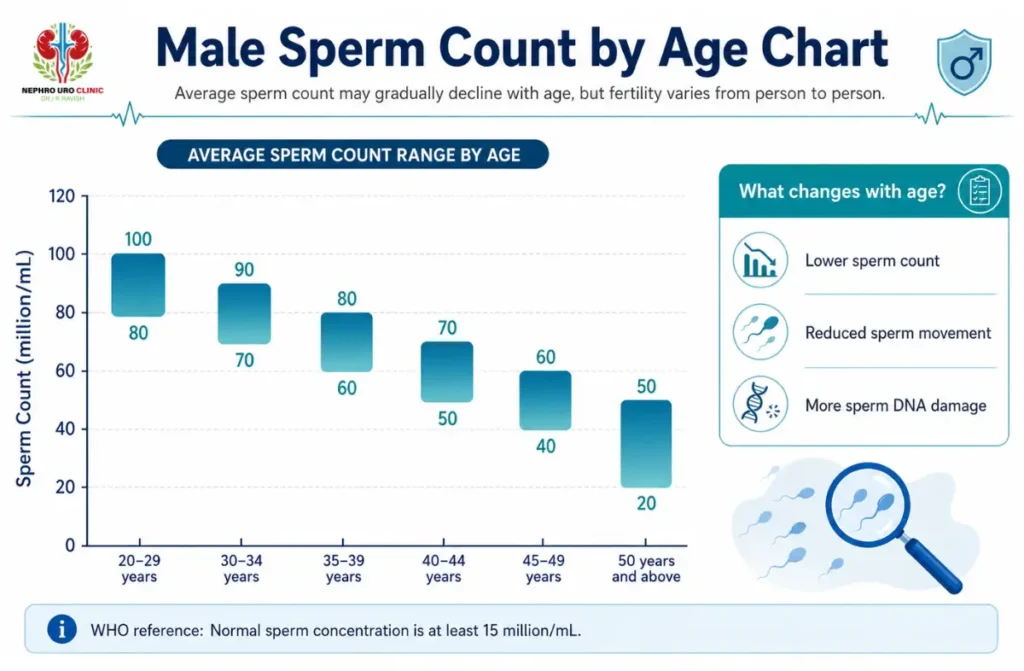
- The male fertility age chart below shows how sperm health may gradually change with age.
Sperm Count by Age: Easy to Understand Chart
- Sperm health can slowly change with age, especially after the mid 30s. While many men can still become fathers later in life, fertility may gradually reduce due to changes in sperm count, movement, and quality.
- According to the World Health Organization, a normal sperm count is at least 15 million sperm per milliliter of semen. The table below gives a general idea of how sperm health may change across different age groups.
- The table below gives a general idea of how fertility may change with age. These are average trends collected from fertility studies and clinical observations. Individual results can vary based on lifestyle, health conditions, stress, smoking, sleep, weight, and medical history.
Male Sperm Count by Age Chart
| Age Group | Average Sperm Count Range | Common Fertility Changes | Pregnancy Chances |
| 20 to 29 years | 80 to 100 million/mL | Peak fertility years with strong sperm movement and healthy sperm shape | Highest natural pregnancy chances |
| 30 to 34 years | 70 to 90 million/mL | Mild decline may begin in sperm movement and semen quality | Pregnancy is still common in most couples |
| 35 to 39 years | 60 to 80 million/mL | Gradual reduction in sperm motility and DNA quality | Conception may take longer for some couples |
| 40 to 44 years | 50 to 70 million/mL | Noticeable decline in sperm quality and hormone balance | Increased fertility challenges in some men |
| 45 to 49 years | 40 to 60 million/mL | Lower sperm movement and higher risk of sperm DNA damage | Higher chance of delayed pregnancy |
| 50 years and above | 20 to 50 million/mL | Reduced semen volume and slower sperm movement | Natural pregnancy is still possible but may take longer |
Research involving thousands of semen samples has shown that semen volume, sperm movement, and total sperm count often reduce with increasing age. One large study found that sperm quality changes become more noticeable after age 35, while men above 40 may have higher sperm DNA damage compared to younger men.
How Sperm Health Affects Pregnancy Chances
Sperm health plays an important role in natural pregnancy. For fertilization to happen, sperm must swim through the female reproductive tract and successfully reach the egg.
Doctors usually evaluate three important factors during fertility testing:
- Sperm count
- Sperm movement
- Sperm shape
What is Considered a Low Sperm Count?
- A low sperm count means fewer sperm are present in semen than expected. According to fertility guidelines, less than 15 million sperm per milliliter is usually considered low. This is why the term 15 million sperm count is often mentioned in fertility discussions.
- Some men may still father children naturally even with a lower sperm count. However, the chances of pregnancy may take longer because fewer sperm are available to reach the egg.
- Doctors also look at the total sperm count normal range along with sperm movement and semen volume before diagnosing fertility problems.
Low sperm count may happen because of:
- Hormone imbalance
- Varicocele
- Infection
- Smoking
- Alcohol use
- Obesity
- Stress
- Diabetes
A proper semen test helps identify the exact issue.
Common Signs of Low Sperm Count in Men
Many men with fertility problems may not notice any symptoms at first. In some cases, difficulty getting a partner pregnant may be the first sign.
Other possible symptoms include:
- Low sexual desire
- Trouble maintaining erections
- Pain or swelling near the testicles
- Reduced facial or body hair
- Low energy levels
Some men may also have low sperm motility along with low sperm count, which can further affect fertility. If pregnancy is delayed for several months, fertility testing may help identify the cause early.
What Happens During a Semen Analysis Test?
A semen analysis test is one of the most common tests used to evaluate male fertility. The semen sample is examined in a laboratory to check sperm health and semen quality.
The report usually includes:
- Sperm count
- Sperm movement
- Sperm shape
- Semen volume
- Sperm concentration
Doctors may also measure the sperm motility index and sperm motility percentage for pregnancy to understand how effectively sperm can move. In many reports, a semen volume of around 1.5 ml sperm volume or higher is generally considered within normal range.
Treatment Options for Low Sperm Count and Age Related Fertility Problems
- Many men with fertility problems can still become fathers naturally or with medical support. Treatment depends on the cause of low sperm count, age, overall health, and sperm quality.
- In mild cases, doctors may first recommend lifestyle changes such as improving diet, exercising regularly, reducing stress, sleeping well, and avoiding smoking or alcohol.
If medical treatment is needed, doctors may recommend:
- Hormone treatment to improve sperm production
- Medicines to treat infections
- Surgery for varicocele
- Fertility procedures like intrauterine insemination
- IVF treatment
- ICSI procedure
Some men may also need advanced sperm testing if sperm movement or sperm quality is low. Older men can still have successful pregnancies, but fertility treatment may sometimes be helpful if conception takes longer than expected. A proper medical evaluation helps doctors choose the most suitable treatment based on individual fertility health.
When should you Meet a Fertility Specialist?
It may be helpful to meet a fertility specialist if pregnancy has not happened after regular unprotected intercourse for one year.
Couples should consider earlier evaluation if:
- The female partner is above 35 years
- There is a history of low sperm count
- There are erection or ejaculation problems
- The man has undergone previous surgery near the reproductive organs
- There is pain or swelling in the testicles
Early fertility testing can help identify treatable causes before the problem becomes more stressful.
Health Conditions that can Affect Sperm Count at Any Age
Several health conditions can affect sperm production and fertility.
These include:
- Diabetes
- Obesity
- Hormone imbalance
- Thyroid problems
- Infections
- Varicocele
- Genetic conditions
Certain medicines, chemotherapy, and long term illnesses may also affect fertility. Managing overall health plays an important role in protecting sperm quality.
Natural Ways to Boost Sperm Count at Any Age
- Healthy daily habits can support sperm production and improve overall fertility health. In many men, small lifestyle changes may help improve sperm count, sperm movement, and hormone balance over time.
- Many people ask how many sperms are produced in a day. The body naturally produces millions of sperm daily, but sperm quality is usually more important than sperm quantity alone.
Diet and Nutrition
A balanced diet may help support healthy sperm production and protect sperm cells from damage.
Foods that may support fertility include:
- Fruits
- Vegetables
- Nuts and seeds
- Fish
- Eggs
- Whole grains
- Leafy greens
Foods rich in zinc, antioxidants, vitamin C, and omega 3 fatty acids may support healthy sperm count and better sperm movement. Drinking enough water and reducing processed foods may also help improve reproductive health.
Healthy Lifestyle Habits
Daily lifestyle habits can strongly affect fertility over time.
Helpful habits include:
- Exercising regularly
- Maintaining healthy weight
- Sleeping well
- Managing stress
- Staying physically active
Men above 40 may also benefit from regular medical checkups to monitor overall reproductive health.
Habits to Avoid
Certain habits may reduce sperm quality and fertility over time.
These include:
- Smoking
- Heavy alcohol use
- Poor sleep
- Lack of exercise
- Unhealthy diet
Smoking and alcohol may affect sperm count, sperm movement, and sperm DNA quality. Reducing or avoiding these habits may improve fertility outcomes in some men.
Environmental Factors that Affect Sperm Health
- Heat exposure and stress may also affect sperm production.
- Long term stress can affect hormone levels, sleep quality, and sexual health. Stress management techniques like exercise, meditation, and counseling may help support fertility health.
- Frequent hot baths, tight clothing, and placing laptops directly on the lap may increase heat around the testicles, which can affect sperm production in some men.
Talk to a Urology Specialist in Bengaluru
- If you are facing difficulty conceiving or have concerns about sperm health, early medical advice can help identify possible causes and treatment options.
- An experienced urology specialist can guide you with fertility testing, semen analysis, lifestyle guidance, and treatment based on your individual health condition.
- Couples in Jayanagar and Tilaknagar can benefit from timely fertility evaluation and personalized reproductive care.
Conclusion
Male fertility naturally changes with age, and sperm count is one of the key factors affected over time. While many men can still father children later in life, sperm quality, motility, and overall reproductive health may gradually decline after the mid-30s. A sperm count chart by age helps create awareness, but it should never be seen as the only measure of fertility.
Lifestyle habits such as regular exercise, healthy nutrition, good sleep, stress management, avoiding smoking, and limiting alcohol intake can play a major role in maintaining healthy sperm production at any age. Early evaluation is also important for couples facing delays in conception. If there are concerns about fertility, consulting a qualified fertility specialist or andrologist can help identify the underlying causes and guide the right treatment approach. Understanding age-related fertility changes allows men to make informed decisions about their reproductive health and future family planning.