Medically reviewed by Dr. I. R. Ravish, MBBS, MS, MCh (Urology), Nephro Uro Clinic, Bengaluru | Last Reviewed: October 2026
If you are reading this, someone you love may be living with advanced prostate cancer. You may be worried about what the coming weeks will bring, and whether the changes you see mean the end is near.
This guide is here to help you understand what is happening. It explains which symptoms of advanced prostate cancer can often be treated, which problems need urgent care, and the signs that a person may be in the last weeks or days of life. It also explains how you can keep your loved one comfortable, and where to find support.
About this article: This article was reviewed by Dr. I. R. Ravish, a urologist who treats prostate cancer. The end of life and comfort care guidance is based on information from the NHS, Macmillan Cancer Support and the American Cancer Society. For care in the final stages, please follow the advice of your loved one’s oncologist and palliative care team.
Quick Answer: In the last weeks and days of life, the signs you are dying of prostate cancer are often the same as with many serious illnesses. The person sleeps much more, eats and drinks very little, becomes weaker, may become confused or restless, and their breathing and skin colour may change. But many symptoms of advanced prostate cancer, such as bone pain, tiredness and urine problems, can be treated and do not always mean death is near. A palliative care team can help you tell the difference and keep your loved one comfortable.
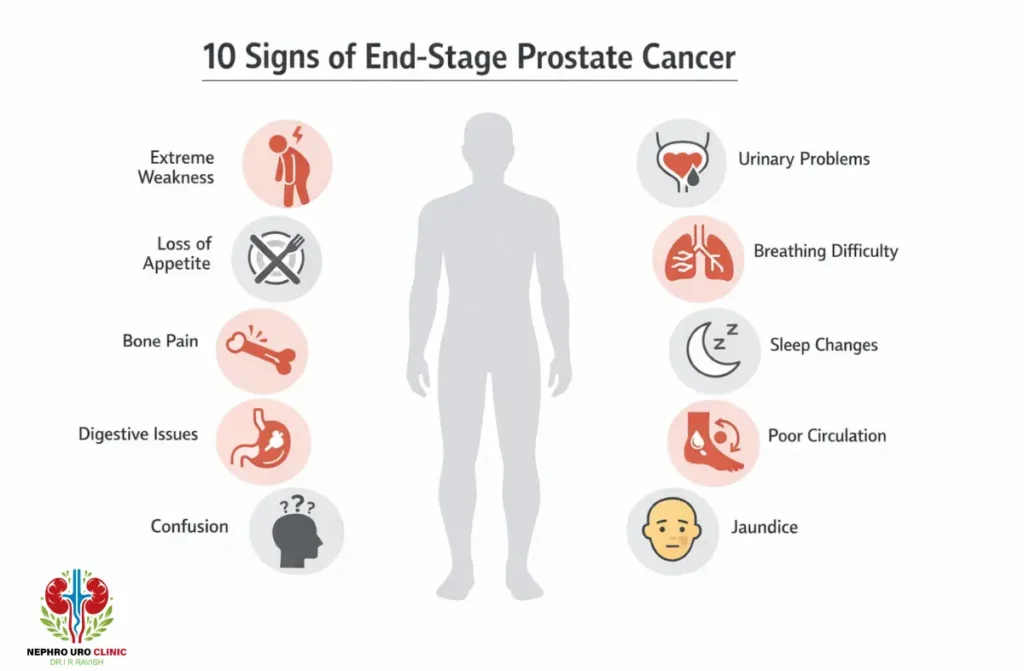
Advanced Prostate Cancer Does Not Always Mean the End Is Near
Advanced prostate cancer may mean the cancer has grown beyond the prostate, or has spread to other parts of the body. When it spreads, it most often goes to the bones. It can also spread to lymph nodes and, less often, to organs such as the liver or lungs.
Cancer that has grown just outside the prostate can sometimes still be treated with the aim of curing it. When prostate cancer has spread to the bones or distant organs, it is called metastatic prostate cancer. This is generally not curable, but treatments such as hormone therapy can often control it and relieve symptoms for months or years.
This is why it is important not to assume that every new symptom means the end. Many problems have a cause that doctors can treat.
Symptoms of Advanced Prostate Cancer That Can Often Be Treated
Bone Pain
Bone pain in the back, hips, ribs or legs is common when cancer has spread to the bones. It can often be eased with regular pain medicines, radiotherapy to the painful area, or medicines that help protect the bones. Let the doctor know about any new or worsening pain. Cancer in the bones does not always cause pain, so regular check ups and scans also matter.
Tiredness and Weakness
Feeling very tired is common. It can be caused by the cancer, by treatment, or by a low blood count (anaemia). Some of these causes can be treated, so it is worth mentioning to the doctor.
Urine Problems
Advanced prostate cancer can press on the bladder outlet or the tubes that drain the kidneys. This can cause difficulty passing urine, a weak flow or blood in the urine.
It is important to know that weak flow and difficulty passing urine are also very common in men with a harmless enlarged prostate. On their own, these symptoms are not a sign that someone is dying.
If the cancer blocks the tubes that drain the kidneys, the person may pass much less urine, feel sick or have swelling. Depending on where the blockage is and the person’s overall condition, a urologist may be able to relieve it with a thin tube called a ureteric stent, or a drainage tube placed through the back (nephrostomy). This is not always possible or right for every person, and the team will discuss the options with you.
Poor Appetite and Weight Loss
Many men with advanced cancer lose interest in food and lose weight. Small, frequent meals of foods they enjoy can help. A doctor or dietitian can also check for treatable causes such as nausea, constipation or mouth sores.
Swelling in the Legs
Swelling can happen when cancer affects the lymph nodes and fluid cannot drain well. Sudden swelling in one leg, especially with pain or redness, can be a sign of a blood clot and needs urgent care.
Emergency Signs: Get Medical Help Straight Away
Some problems in advanced prostate cancer are emergencies. Quick treatment can prevent lasting harm and ease suffering. Contact your doctor or go to the hospital immediately if your loved one has:
- Severe or worsening back pain, especially with leg weakness, numbness or tingling, or new problems controlling the bladder or bowels. This can be a sign of metastatic spinal cord compression, where the cancer presses on the spinal cord. It needs immediate medical assessment, because delay can cause lasting damage.
- Great thirst, passing a lot of urine, constipation, sickness, drowsiness or new confusion. These can have several causes. One possible cause is high calcium in the blood (hypercalcaemia), which can be treated. A blood test can check for it.
- Being unable to pass urine at all, especially with lower tummy pain.
- A fever, shivering or feeling suddenly very unwell, especially if they are having chemotherapy.
- Sudden breathlessness, chest pain, or a painful swollen leg, which can be signs of a blood clot.
- Pain that is severe and not controlled by their usual medicines.
If your loved one is already receiving hospice or palliative care, call that team first. They can advise you and help decide what is best.
Signs You Are Dying of Prostate Cancer: The Last Weeks and Days of Life
When the body is very weak and nearing the end of life, some changes happen gradually. Not everyone has all of them, and the timing is different for each person. None of these signs on its own proves that death is very near. Doctors and nurses who know your loved one can help you understand what is happening.
Sleeping Much More
The person may spend most of the day asleep and be hard to wake. When awake, they may be drowsy and only speak a few words.
Eating and Drinking Very Little
As the body nears the end of life, appetite and the ability to take in food and fluids often decrease. The person may stop eating and take only small sips of fluid. This is a natural part of the process. Forcing food or drink can cause discomfort, and if the person has difficulty swallowing, it can cause choking. Offer small sips or ice chips if they want them, and keep the mouth moist.
Confusion or Restlessness
The person may not know where they are, may not recognise people, or may seem restless and agitated. Some of this can be caused by medicines, infection or high calcium, so tell the care team. They can often help calm the restlessness.
Changes in Breathing
Breathing may become irregular, with long pauses between breaths. There may be a rattling sound, caused by fluid in the throat that the person can no longer clear. This can be upsetting to hear, but it does not usually seem to distress the person. The care team can suggest changes in position or medicines that may help.
Changes in the Skin and Body
The hands and feet may feel cold. The skin may look pale, blue or blotchy, especially on the knees and feet. The person will usually pass much less urine, and it may be darker.
Less Awareness
In the last days, the person may become unconscious for long periods. Some people may still hear or sense the presence of loved ones even when they cannot respond. Many families find comfort in talking gently, holding hands and playing music the person loves.
How to Keep Your Loved One Comfortable
Pain Relief
Give pain medicines regularly as prescribed, rather than waiting for the pain to become strong. If the person can no longer swallow, the care team can give medicines in other ways, such as patches, injections or a small pump under the skin.
Mouth Care
When a person is drinking very little, the mouth becomes dry. Wet the lips and mouth with a damp swab or sponge, and apply lip balm. This small act gives a lot of comfort.
Position and Skin Care
Change the person’s position gently from time to time to protect the skin and help comfort. How often depends on their comfort and skin condition, so follow the care team’s advice. A pressure relieving mattress can help prevent bed sores.
Breathing Comfort
Raising the head of the bed and keeping the room airy may help. A cool fan directed gently toward the face may also ease the feeling of breathlessness for some people.
A Calm Space
Keep the room quiet, with soft light and familiar voices. Sit with them, talk to them, and let them know they are not alone.
Palliative Care and Hospice Care
Palliative care is care that focuses on comfort, symptom relief and emotional support. It is not only for the last days. It can start at any stage of advanced cancer, alongside other treatments.
Hospice care usually means palliative care for people nearing the end of life. In India, the services available vary from place to place. Care may be given at home, in a hospice centre or in hospital.
A palliative care team can help with pain, breathlessness, restlessness and other symptoms. They also support the family with practical and emotional needs.
In Bengaluru, ask your urologist, oncologist or hospital about palliative care and home care services near you. Dedicated hospices, such as Karunashraya, also provide care and support for patients and families.
Talking About Wishes
If your loved one is able, it can help to talk early about what matters to them. This might include:
- where they would like to be cared for
- which treatments they would or would not want
- who they would like to have with them
- spiritual, religious or family wishes
These conversations are hard. But many families say they felt more at peace knowing they had followed their loved one’s wishes. The palliative care team can help guide these talks.
Looking After Yourself as a Caregiver
Caring for someone at the end of life is physically and emotionally exhausting. Accept help from family and friends, take short breaks when you can, and talk to someone about how you feel. The palliative care team, counsellors and support groups are there for you too.
The Bottom Line
The signs that a person with prostate cancer may be nearing the end of life often appear slowly, over weeks and days. They include much more sleep, eating and drinking very little, confusion, changes in breathing and cold hands and feet. But many symptoms of advanced prostate cancer can be treated, and some need urgent care. Stay in close touch with your loved one’s doctors and palliative care team. With good support, it is possible to keep your loved one comfortable, peaceful and surrounded by care.
References:
- NHS. Prostate cancer; End of life care: what to expect in the last hours and days.
- Macmillan Cancer Support. Advanced prostate cancer; The last few weeks of life.
- Prostate Cancer UK. Advanced prostate cancer; Metastatic spinal cord compression.
- American Cancer Society. Signs and symptoms of prostate cancer; Nearing the end of life.
Read also How to Get Rid of Kidney Stone Pain.