
Medically reviewed by Dr. I. R. Ravish , Consultant Urologist, Nephro Uro Clinic
Erectile dysfunction, often shortened to ED, is the ongoing difficulty in getting or keeping an erection that is firm enough for satisfying sexual activity. Almost every man has an off night now and then because of tiredness, a heavy week at work, or too much on his mind. That is normal. When it keeps happening over several weeks or months, it deserves proper attention, and it may be time to speak to a doctor for erectile dysfunction.
Despite how common it is, ED is one of the least discussed health problems. Many men stay silent for years out of embarrassment. That silence has a cost. It can chip away at confidence, strain a marriage, and delay the diagnosis of conditions such as diabetes or heart disease that may be sitting behind the symptom.
The encouraging part is that ED is a medical condition with identifiable causes, and in most cases it can be managed once those causes are understood. This guide explains how ED develops, which signs mean it is time to see a doctor, how an evaluation works, and what treatment choices exist. It is written for men in Bengaluru and across Karnataka who are looking for a doctor for erectile dysfunction and want clear, honest information before booking a visit.
What Is Erectile Dysfunction?
An erection is not just a local event. It is the result of the brain, nerves, hormones and blood vessels working together. When a man feels aroused, the brain sends signals down the nerves to the penis. The arteries then widen, blood flows in, and the veins that normally let blood drain are compressed so the blood stays in place. If any step in this chain is disturbed, the erection can weaken or fade.
This is why ED is better understood as a signal from the body than as a personal failing. It is rarely about willpower or masculinity. It is usually about circulation, nerve function, hormones or the state of the mind, and often a mix of these.
ED is also more common than most people assume. Large population studies suggest that a significant share of men above 40 notice some degree of difficulty, and the likelihood rises with age. Still, age alone is not the explanation. Doctors now see more men in their 30s and early 40s who are dealing with ED, frequently linked to long working hours, poor sleep, smoking, unmanaged stress and sedentary routines. Seeking help does not mean something is seriously wrong. It means you are paying attention to your health.
Common Causes of Erectile Dysfunction
A urologist’s first job is to find out why the problem is happening. Treating the symptom without understanding the cause rarely gives lasting results. Causes generally fall into physical, psychological and lifestyle groups.
Cardiovascular and Blood Vessel Problems
The arteries supplying the penis are much narrower than those supplying the heart. High blood pressure, high cholesterol and atherosclerosis can restrict blood flow here first. For this reason, ED is sometimes the earliest visible sign of a wider vascular problem, and doctors take it seriously as a prompt to check overall heart health.
Diabetes and Hormonal Factors
Blood sugar that stays high over a long period can injure small nerves and blood vessels throughout the body. The result may be reduced sensation and poorer blood flow to the pelvic region. Low testosterone can also play a part. It may reduce sexual desire, energy and mood, although it is only one possible factor and is not responsible for every case.
Stress, Anxiety and Depression
The mind has a direct line to the body. Chronic stress keeps the body on high alert, and the stress hormones involved can limit blood flow. Performance anxiety is another common trap. One disappointing experience leads to worry about the next one, and that worry itself makes an erection harder to achieve. Depression, guilt and unresolved relationship tension can add to the cycle.
Lifestyle and Daily Habits
Smoking damages the inner lining of blood vessels. Regular heavy drinking dulls nerve responses. Excess weight and lack of exercise reduce circulation and stamina. Poor sleep affects hormone balance. None of these cause trouble overnight, but together they can slowly reduce erectile function.
Medicines, Surgery and Injury
Some prescription medicines, including certain drugs for blood pressure, depression and prostate conditions, can affect erections as a side effect. Pelvic surgery, spinal injury or past trauma may also interfere with nerve supply. Never stop a prescribed medicine on your own. If you suspect it is contributing, discuss it with your doctor.
Signs That You Should See a Specialist
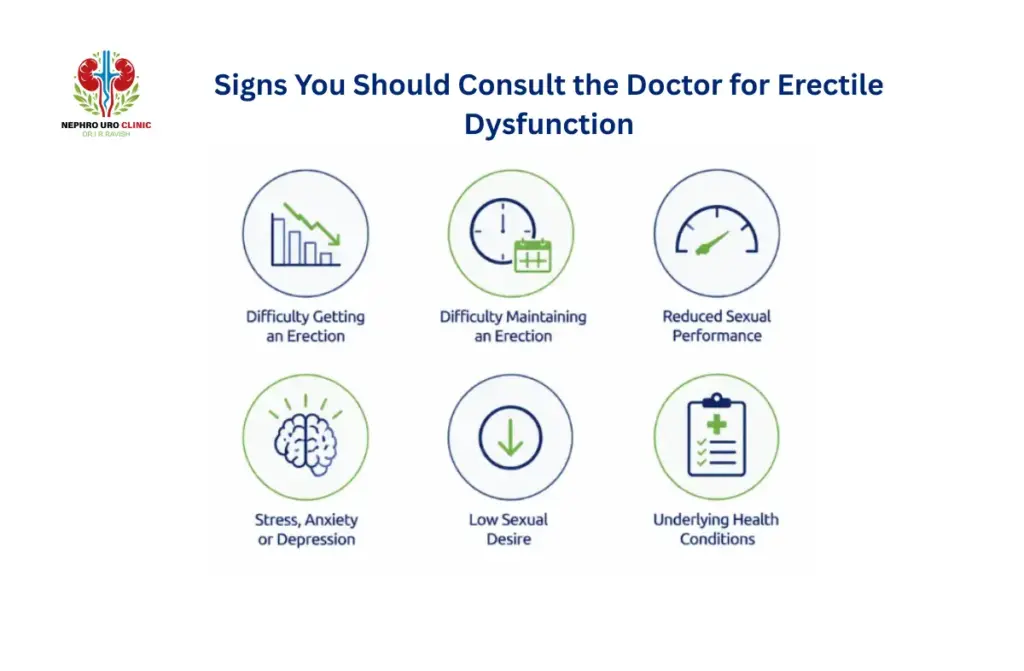
Occasional trouble is not a reason to panic. A consultation is worth considering when you notice any of the following over several weeks:
- You often find it hard to get an erection, even when relaxed and interested.
- You can start but cannot maintain firmness long enough to complete intercourse.
- Your interest in intimacy has dropped noticeably for a long period.
- You feel pain, curvature or discomfort during an erection or intercourse.
- The problem is affecting your mood, your confidence or your relationship.
- You have diabetes, high blood pressure, heart disease or a history of pelvic surgery and have started noticing changes.
Morning erections that disappear completely, or a sudden onset of ED with no clear trigger, are also worth mentioning to a doctor.
Doctor for Erectile Dysfunction: About Dr. I. R. Ravish
Choosing who to speak with about such a private matter is an important decision. Patients naturally want to know about a doctor’s training, experience and way of working before they walk into a clinic.
Dr. I. R. Ravish is a urologist with more than 28 years of clinical experience. His qualifications include MBBS, MS in General Surgery and MCh in Urology, along with a fellowship in Pediatric Urology from KLE University and JNMC, with additional training in the USA. His practice covers the full range of urological care, with a particular focus on male sexual and reproductive health, including erection and ejaculation concerns, semen and hormone evaluation, and treatment of conditions such as varicocele.
He consults at Nephro Uro Clinic in Jayanagar and at Sagar Hospitals in Tilaknagar, Bengaluru. His approach centres on listening first. Each patient’s history, daily routine, health conditions and concerns are considered before any test or treatment is suggested. Patients can expect plain explanations without heavy medical jargon, and a conversation that respects their privacy. You can read more about his background and training on the About Dr. I. R. Ravish page.
How ED Is Evaluated
A careful evaluation is the foundation of good treatment. It usually unfolds in a few clear steps, and most of it is a conversation rather than a procedure.
Medical History and Physical Examination
The doctor will ask when the problem began, whether it happens every time or only sometimes, and whether morning erections still occur. Questions about existing illnesses, medicines, smoking, alcohol, sleep and stress levels help paint a full picture. A short physical examination follows, which may include checking blood pressure, the genitals and signs of hormonal change.
Blood and Laboratory Tests
Simple blood tests are often advised to look for diabetes, abnormal cholesterol, kidney or liver problems, and testosterone levels. These results can uncover conditions that were previously unnoticed and guide the choice of treatment.
Specialised Tests When Needed
Not every patient needs advanced investigations. When the cause is unclear or the first line of treatment does not help, additional tests may be considered. A penile Doppler ultrasound shows how well blood is flowing into and out of the penis. Other tests can help separate physical causes from psychological ones. The doctor will explain why a test is being suggested and what it can tell you.
Looking at Mental and Emotional Health
Since stress, anxiety and mood strongly influence sexual function, these are discussed openly. This is not meant to imply the problem is “all in your head.” It simply ensures nothing important is missed.
Treatment Options for Erectile Dysfunction
Treatment is individual. What suits one man may not suit another, and the choice depends on the cause, the severity, your age, other health conditions and your own preferences. Common approaches include the following.
- Lifestyle changes. Stopping smoking, reducing alcohol, losing excess weight, exercising regularly, sleeping well and managing stress can improve erectile function on their own in some men, and they strengthen the effect of other treatments.
- Treating underlying conditions. Bringing diabetes, blood pressure and cholesterol under control often leads to better erections as a side benefit.
- Oral medicines. A group of medicines called PDE5 inhibitors helps increase blood flow to the penis when a man is sexually aroused. They work well for many patients but are not suitable for everyone, especially men taking nitrate medicines for heart conditions. These should only be taken on a doctor’s prescription, never bought or shared casually.
- Hormone treatment. If tests confirm low testosterone, replacement therapy may be considered under medical supervision, with regular follow-up.
- Counselling and psychosexual therapy. When anxiety, stress or relationship concerns are a major factor, talking therapy can make a real difference, either alone or along with medical treatment.
- Other medical options. For men who do not respond to tablets, options such as injections, vacuum devices or surgical solutions including penile implants may be discussed. These are considered after a full assessment and a clear conversation about benefits and risks.
No treatment works the same way for everyone, and results vary from person to person. A good doctor will set realistic expectations and review progress with you over time.
How to Choose an Erectile Dysfunction Doctor
If you are searching for an erectile dysfunction doctor in Bengaluru or near you, a few practical points can help you decide:
- Recognised qualifications. Look for a registered urologist or andrologist with formal training in urology and male sexual health. You can verify a doctor’s registration with the relevant medical council.
- Relevant experience. Years of practice in treating male sexual and reproductive concerns bring practical judgment, especially in complicated cases.
- Clear communication. You should feel comfortable asking questions and receiving answers you can understand.
- Privacy and respect. The consultation space should be private, and the conversation free of judgment.
- Evidence-based care. Treatment should be recommended after proper evaluation, not offered as a one-size-fits-all package.
Everyday Habits That Support Better Erectile Health
Medical care works best alongside healthy routines. Aim for around 150 minutes of moderate exercise each week, such as brisk walking, cycling or swimming. Eat more vegetables, fruits, whole grains, nuts and pulses, and cut back on fried and heavily processed food. Keep your weight in a healthy range, quit tobacco, and keep alcohol modest. Make time for adequate sleep, and find ways to unwind, whether that is yoga, time outdoors or simply talking with your partner. Open communication with your partner often lowers anxiety more than any tablet can.
Conclusion
Erectile dysfunction can feel isolating, but you are far from alone, and it is a medical condition that deserves the same attention as any other. In many men it is also a useful early signal about blood pressure, blood sugar, hormones or stress that is worth looking into. The earlier it is evaluated, the clearer the path forward tends to be.
If you have been dealing with these symptoms for some time, speaking with a qualified urologist is a sensible next step. Dr. I. R. Ravish offers consultations at Nephro Uro Clinic, 7th Block, Jayanagar, Bengaluru 560082, and at Sagar Hospitals, Tilaknagar, Bengaluru 560041. To book an appointment, you can call 88612 21822.