Most people put off seeing a urologist longer than they should, and it is rarely because of the symptoms themselves. It is the not knowing. What will the doctor actually do? Will it hurt? Do I have to undress completely? Will they examine me the same way regardless of whether I am a man or a woman?
These are normal questions, and there is no need to feel embarrassed asking them. A urologist’s job is to look after a part of the body that most people never discuss openly, which means almost everyone walks in feeling some version of the same nervousness. If you have been wondering how does a urologist examine you, this page walks through exactly what to expect, in the order it actually happens, so you know what is coming before you ever sit down in the consultation room.
Who Typically Sees a Urologist
A urologist treats conditions involving the urinary tract in both men and women, and the male reproductive system specifically. A few common reasons people end up in this chair:
Men experiencing prostate-related symptoms, or those discussing prostate cancer screening with their doctor, since modern screening decisions are based on individual risk factors and symptoms rather than age alone.
Anyone, of either gender, dealing with urinary symptoms such as a burning feeling when urinating, blood in the urine, frequent trips to the bathroom at night, or pain in the back or pelvis that will not go away.
Men experiencing erectile dysfunction, low testosterone symptoms, or fertility concerns, since a urologist evaluates the physical factors behind all three.
Couples experiencing difficulty conceiving, where evaluating male fertility is often an important part of the assessment.
If any of this sounds like your situation, the visit itself is far less intimidating than most people expect once they know what is actually going to happen.
Before Anything Physical Happens: The Conversation
Every urology visit starts with talking, not examining. Your doctor will ask about your symptoms, when they started, what makes them better or worse, your general medical history, and any medications you are currently taking. This part of the visit matters more than people realize, since the answers here shape exactly which physical checks and tests actually make sense for you specifically, rather than running every possible test on every patient.
This is also the point where sensitive topics, like sexual function, fertility, or bladder control, come up if relevant. A good urologist will ask these questions directly but gently, and you are never expected to share more than feels necessary for an accurate diagnosis. If something feels too personal to say out loud, you can always say that too. Doctors who specialize in this area have heard it before, and nothing about your symptoms will surprise or embarrass them.
Once the conversation is done, your doctor will explain clearly what comes next, whether that is a physical exam, a urine test, blood work, or imaging, and why each one makes sense given what you have described.
The Physical Exam: What Actually Happens
Not every visit requires a full physical exam, but when one is needed, here is the general order it tends to follow.
General health check first. Many visits begin with the basics: blood pressure, weight, and a general look at your overall health. This gives your doctor context before focusing on anything more specific.
Abdomen and lower back. The doctor will gently press on your abdomen and the sides of your lower back, an area called the flank, to check for tenderness or swelling near the kidneys and bladder. This is painless, though it can feel slightly odd if you are not used to it.
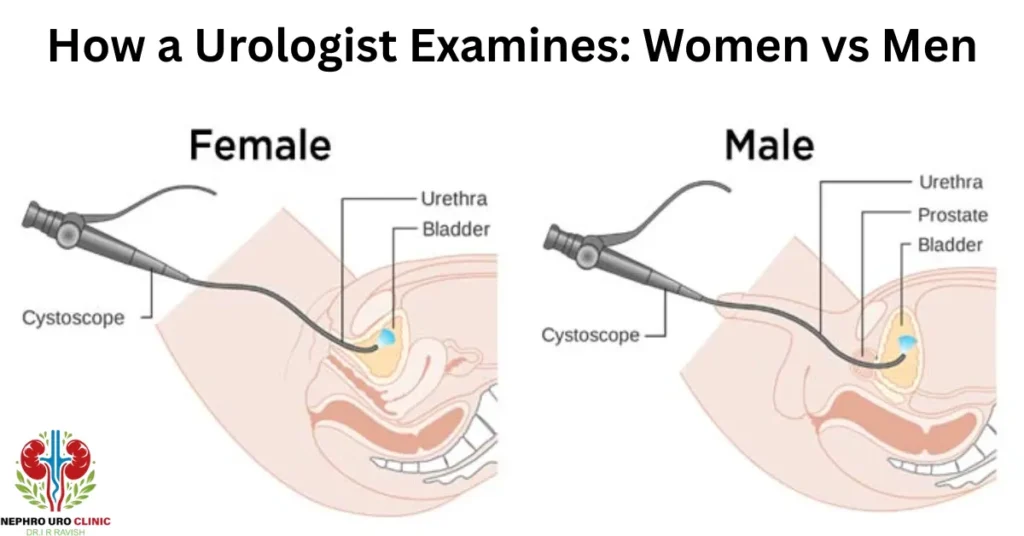
From here, the exam differs depending on whether you are a man or a woman, since the relevant anatomy and common conditions differ. Here is what each looks like specifically.
What the Exam Involves for Men
If your symptoms point toward the prostate, testicles, or penis, the exam usually includes a visual and gentle manual check of the genital area for any swelling, lumps, or tenderness, and a check of the groin area for hernias.
If prostate concerns are relevant, your doctor may recommend a digital rectal exam, often shortened to DRE. Not every male patient needs one. Whether a DRE makes sense depends on your age, your symptoms, and what your doctor finds during the conversation that comes first, not something done automatically at every visit. When it is recommended, it involves the doctor inserting a gloved, lubricated finger a short distance into the rectum to feel the prostate directly. It takes well under a minute. Most men describe it as uncomfortable and a little strange rather than painful, and it passes quickly. It remains one of the most useful, low-cost ways to check the prostate for size, texture, or anything that feels abnormal.
If erectile dysfunction or fertility is the concern, the exam may also include checking penile structure, blood flow indicators, or signs related to hormone levels, depending on what your history suggests is relevant.
What the Exam Involves for Women
Women see urologists most often for bladder issues, recurring UTIs, urinary incontinence, or pelvic pain. The exam in these cases typically focuses on the lower abdomen and pelvic area, checking for tenderness, signs of bladder prolapse, or pelvic floor muscle issues that could be contributing to symptoms like leakage or urgency.
Depending on your specific symptoms, this may include an external pelvic exam, and occasionally an internal one if your doctor needs to assess bladder support or pelvic organ position more closely. This is no different in style from a pelvic exam during a routine gynecological visit, and your doctor will always explain what they are checking for and why before doing it.
Tests That Often Follow the Physical Exam
Depending on what the conversation and physical exam suggest, a few tests commonly come next.
A urine sample, usually a simple clean-catch sample, checks for infection, blood, or other abnormalities. This is one of the most common and least invasive tests a urologist orders, and it is often the very first thing requested at a visit.
Blood tests, when relevant, can check kidney function, PSA levels for prostate screening in men, or hormone levels if fertility or sexual health is the concern.
Imaging, such as an ultrasound, is frequently the first imaging test used since it is painless and does not involve radiation. It gives a clear look at the kidneys, bladder, prostate, or testicles and can pick up stones, cysts, or other abnormalities. CT scans and MRIs offer more detailed pictures and are usually reserved for situations needing a closer look, such as complex kidney stones or further prostate evaluation.
More specialized tests, like a cystoscopy, where a thin scope examines the inside of the bladder and urethra, or urodynamic testing, which measures how well the bladder stores and releases urine, are not part of every visit. These come up specifically when symptoms suggest a need for a closer, more direct look, and your doctor will explain the reasoning before recommending either.
None of these tests happen automatically just because you walked through the door. Your doctor selects based on what your specific symptoms suggest, not a fixed checklist applied to everyone.
How to Prepare for a Urology Appointment
A little preparation makes the visit faster and more useful for both you and your doctor.
- Bring any previous test results, especially recent blood work, urine tests, or imaging reports
- Make a list of current medications, including supplements
- Note when your symptoms started and anything that seems to make them better or worse
- Bring imaging reports if you have had any scans done elsewhere
- If your doctor’s office instructs you to arrive with a full bladder, usually relevant for certain bladder-related tests, follow that instruction even though it may feel slightly inconvenient
None of this is required to be seen, but having it ready often means fewer follow-up visits before a clear plan is in place.
A Word on the Anxiety Itself
If you have been putting off a urology visit because the idea of being examined feels embarrassing, you are far from alone in that. Nearly every patient feels some version of this before their first visit, and almost everyone reports afterward that it was far less uncomfortable, physically and emotionally, than they had built it up to be in their head.
Urologists examine bodies like yours every single day. There is no symptom or body part that will surprise your doctor, and a good one will move at a pace that respects your comfort throughout. The exam itself, in nearly every case, takes only a few minutes within a visit that is otherwise mostly conversation.
When to Stop Waiting and Book a Visit
If you have noticed blood in your urine, ongoing pain in your back or pelvis, urinary symptoms that have lasted more than a few days, a lump or change in the testicles, or difficulty with erections or fertility that is bothering you, these are all good reasons to see a urologist rather than wait for things to resolve on their own.
At Nephro Uro Clinic in Jayanagar and Sagar Hospitals in Tilaknagar, every first visit follows the same structure described here: a thorough conversation, an exam that goes only as far as your specific symptoms require, and a clear explanation of next steps before any decision is made.
The Bottom Line
Knowing what to expect tends to remove most of the fear around a urology visit. The conversation comes first, the physical exam is brief and specific to your symptoms, and nothing happens without an explanation beforehand. Putting off care because of uncertainty about the exam itself is one of the most common, and most avoidable, reasons people delay treatment they actually need.