Concerns about low sperm count are more common than many men admit. Couples trying to conceive often focus only on the female partner at first. But male fertility plays an equal role. The good news is that in many cases, lifestyle and nutrition make a meaningful difference.
Diet is not a quick fix. It is part of a larger picture that includes sleep, stress levels, weight, and overall health. Still, choosing the right food to increase sperm count can support the body’s natural sperm production process. Small, steady changes often work better than extreme diets or unverified supplements.
What Is Sperm Count?
Sperm count refers to the number of sperm present in a sample of semen. It is usually measured as the number of sperm per milliliter. According to the World Health Organization (WHO), a normal sperm concentration is 15 million sperm per milliliter or more. Total sperm number should be at least 39 million per ejaculate.
Sperm count is only one part of fertility. Movement (motility) and shape (morphology) also matter. A man may have a normal count but reduced movement, which can affect the ability to fertilize an egg.
If a report shows a lower number than expected, it does not always mean infertility. Sperm production happens in cycles of about 70 to 90 days. That means lifestyle changes today may show results only after a few months.
How Is Food Connected to Sperm Count?
Sperm production requires nutrients. The body needs zinc, folate, antioxidants, healthy fats, and protein to produce healthy sperm cells. Poor diet, obesity, and nutrient deficiencies can affect hormone balance and increase oxidative stress. Oxidative stress damages cells, including sperm.
When patients ask about how to increase sperm count by food, the answer lies in consistency. Balanced meals, natural ingredients, and adequate hydration support the body’s ability to produce healthy sperm over time. It is not about one superfood. It is about daily patterns.
Food to Increase Sperm Count
Below are foods that support sperm health when included regularly in a balanced diet.
Eggs
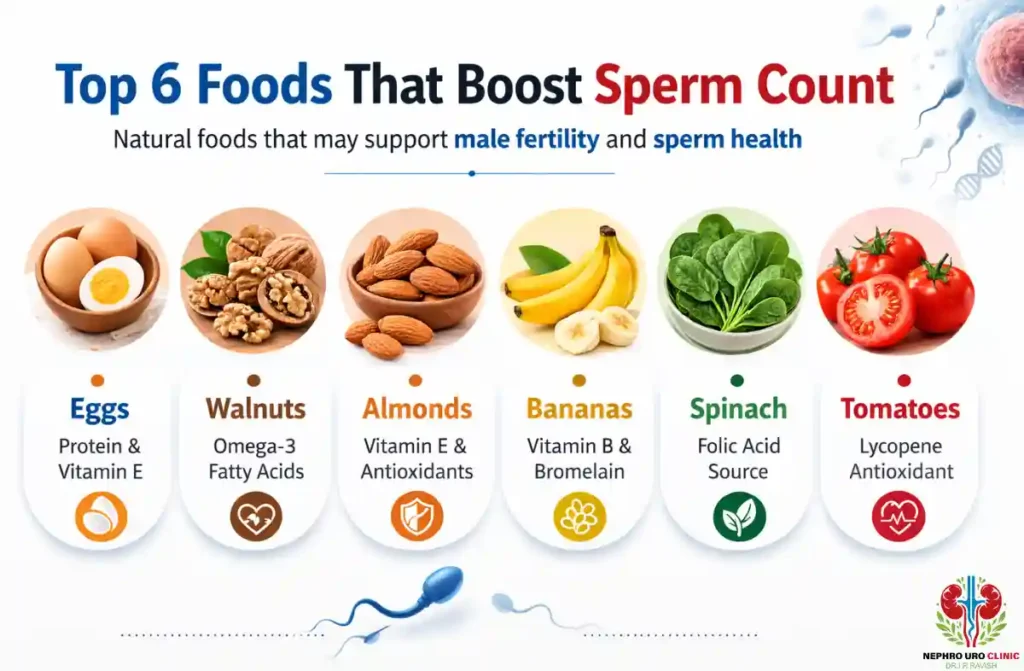
Eggs are rich in protein and vitamin B12. They also contain nutrients that protect sperm from damage. Eating eggs in moderation provides building blocks needed for sperm production. Boiled or lightly cooked eggs are healthier than fried versions.
Spinach
Spinach contains folate, a B vitamin linked to sperm development. Folate helps reduce abnormalities in sperm cells. Including leafy greens in meals supports overall reproductive health. Adding spinach to dal, chapati rolls, or smoothies is an easy habit.
Bananas
Bananas provide vitamin B6 and antioxidants. They also contain bromelain, an enzyme linked to improved sperm health. Bananas are simple, affordable, and easy to include as a daily snack.
Maca Roots
Maca is a traditional root used in some cultures for improving stamina and fertility. Some studies suggest it may support sperm concentration and movement. It should be taken in moderate amounts and preferably after medical advice.
Almonds and Walnuts
Nuts provide omega-3 fatty acids and vitamin E. These nutrients help protect sperm cells from damage. A small handful of mixed nuts daily can be a practical and natural option for those looking for the best food to increase sperm count.
Moringa
Moringa leaves are rich in iron and antioxidants. They support blood flow and general vitality. Some research suggests moringa may improve sperm parameters when combined with a healthy lifestyle.
Pomegranate
Pomegranate is known for its antioxidant properties. Antioxidants help reduce oxidative stress, which can affect sperm quality. Fresh juice without added sugar is preferable.
Fenugreek Seeds
Fenugreek is commonly used in Indian kitchens. It may help support testosterone levels when used in moderation. Soaked seeds or fenugreek powder can be added to meals.
Amla (Indian Gooseberry)
Amla is rich in vitamin C. Vitamin C helps reduce sperm damage caused by oxidative stress. It can be eaten fresh, as juice, or in powder form.
Garlic
Garlic contains selenium and allicin. These compounds may support sperm production and blood flow. Raw garlic in small amounts added to meals can be beneficial.
Tomatoes
Tomatoes are rich in lycopene, an antioxidant associated with improved sperm quality. Cooked tomatoes may offer better absorption of lycopene than raw ones.
Choosing the right food to increase sperm count does not require expensive supplements. Many supportive options are already part of Indian diets.
Foods to Avoid
While focusing on the right diet, it is equally important to avoid harmful choices.
- Processed and packaged foods
- Excess sugary drinks
- Deep-fried snacks
- Excess alcohol
- Smoking
- High intake of trans fats
These foods increase inflammation and oxidative stress. Patients often ask about food to increase sperm count fast, but removing harmful items is just as important as adding healthy ones.
Do’s and Don’ts to Increase Male Fertility
Do’s
- Drink enough water daily
- Exercise moderately 4–5 times per week
- Maintain healthy body weight
- Sleep 7–8 hours regularly
- Manage stress through relaxation techniques
Don’ts
- Avoid tight clothing for long hours
- Avoid keeping laptops directly on the lap
- Avoid excessive sauna or hot baths
- Avoid self-prescribed hormone supplements
These habits, along with the right food to increase sperm count, create a supportive environment for sperm production.
What Foods Produce Sperm Fast?
Many people search for food to increase sperm count fast hoping for immediate results. It is important to understand that sperm development takes nearly three months. No single food can produce instant changes.
However, combining antioxidant-rich foods, nuts, leafy greens, fruits, and adequate protein can improve sperm health over time. Consistency matters more than speed. Those wondering about how to increase sperm count by food should focus on sustained healthy eating rather than quick fixes.
When Diet Isn’t Enough
In some cases, diet alone may not solve the issue. Hormonal imbalances, varicocele (enlarged veins in the scrotum), infections, or genetic conditions may require medical evaluation.
If a couple has been trying for pregnancy for over a year without success, a semen analysis is advisable. A urologist can identify underlying causes and recommend appropriate treatment. Even then, maintaining the best food to increase sperm count supports overall treatment outcomes.
Conclusion
Male fertility is influenced by many factors. Diet plays an important but supportive role. Including nutrient-rich options as daily food to increase sperm count helps the body function better. Removing harmful foods and adopting healthy habits strengthens results.
There is no instant solution. Steady improvements over 2–3 months often bring measurable change. If concerns persist, it is wise to consult a qualified doctor for proper evaluation and guidance. Early advice prevents unnecessary stress and ensures safe, evidence-based care.