Bedwetting, medically known as nocturnal enuresis, is a common condition in children. Many parents assume it happens only because of deep sleep or delayed bladder control, but emotional health can also influence nighttime bladder function.
Children experiencing stress, anxiety, or emotional difficulties may develop bedwetting or see symptoms worsen during stressful periods. Understanding the psychological causes behind bedwetting can help parents respond with support instead of frustration.
The Connection Between Mind and Bladder
While delayed bladder development is the most common reason for bedwetting, emotional stress can also play an important role. Sudden bedwetting after months of dryness is often linked to psychological triggers such as school anxiety, family stress, emotional trauma, or major life changes. Stress can affect sleep quality, hormone balance, and brain-bladder communication, leading to involuntary nighttime urination.
What is Bedwetting?
Bedwetting refers to involuntary urination during sleep after the age when bladder control is normally expected. Most children achieve nighttime bladder control between 5 and 7 years of age.
There are two main types:
- Primary nocturnal enuresis: The child has never consistently stayed dry at night.
- Secondary nocturnal enuresis: Bedwetting starts again after at least six months of dryness.
Secondary bedwetting is more commonly associated with emotional stress, anxiety, or sudden life changes.
How Stress Affects Bladder Control
Psychological stress does not directly “cause” urination, but it can interfere with the body’s normal bladder control mechanisms.
When a child experiences ongoing stress or anxiety, the body releases stress hormones such as cortisol and adrenaline. These hormones may:
- Disturb sleep patterns
- Reduce the brain’s response to bladder signals
- Increase nighttime bladder activity
- Affect the release of antidiuretic hormone (ADH), which normally helps reduce urine production during sleep
As a result, the child may not wake up when the bladder is full, leading to nighttime accidents.
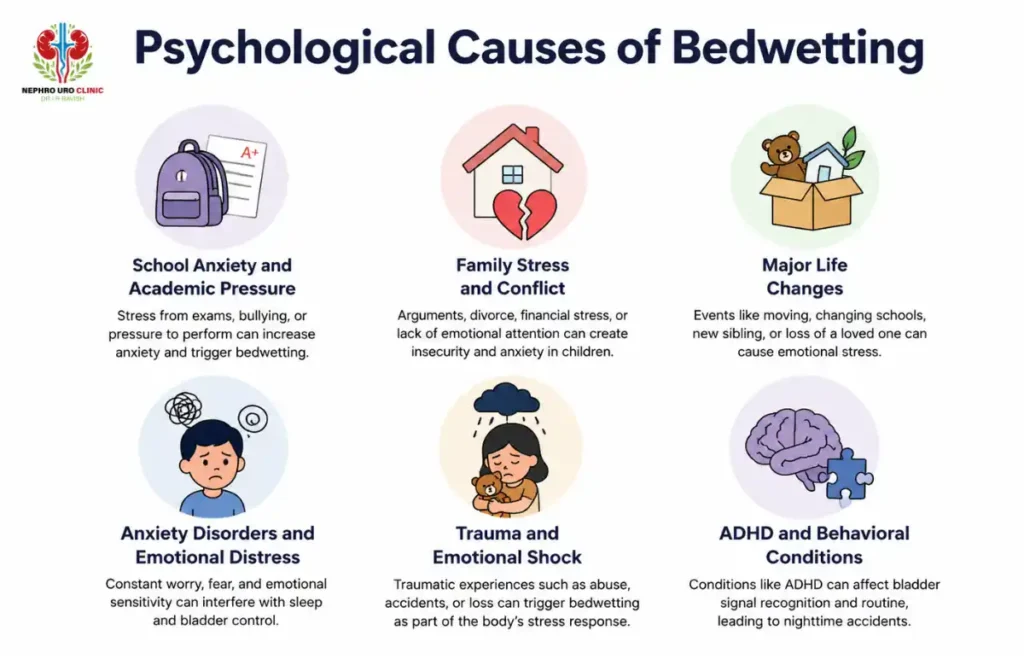
Common Psychological Causes of Bedwetting
School Anxiety and Academic Pressure
- Stress at school is one of the most common emotional triggers linked to bedwetting. Fear of exams, pressure to perform well academically, bullying, or difficulty fitting in socially can increase anxiety levels in children.
- Some children may not openly discuss school stress, and bedwetting may become one of the few visible signs that they are emotionally overwhelmed.
Family Stress and Conflict
- Children are highly sensitive to changes within the family environment. Frequent arguments at home, divorce, separation, financial stress, or lack of emotional attention may create feelings of insecurity and anxiety.
- Emotional tension at home can disrupt sleep quality and emotional stability, which may contribute to nighttime bedwetting.
Major Life Changes
Significant transitions can affect a child emotionally, even when the changes seem positive to adults. Common examples include:
- Moving to a new home
- Changing schools
- Birth of a sibling
- Loss of a loved one
- Changes in caregivers
These adjustments may temporarily increase emotional stress and trigger bedwetting episodes.
Anxiety Disorders and Emotional Distress
Children with anxiety may experience constant worry, fearfulness, or emotional sensitivity. Anxiety can interfere with deep sleep cycles and make it harder for the brain to respond to bladder signals during the night.
Signs of anxiety may include:
- Irritability
- Difficulty sleeping
- Excessive worrying
- Fear of separation
- Emotional outbursts
Trauma and Emotional Shock
Traumatic experiences may sometimes trigger secondary bedwetting. Emotional trauma can include:
- Accidents
- Abuse
- Witnessing violence
- Sudden loss of a family member
- Severe emotional neglect
In these situations, bedwetting may develop as part of the body’s stress response and should be addressed with professional emotional support.
ADHD and Behavioral Conditions
- Studies have shown a higher rate of bedwetting in children with Attention-Deficit/Hyperactivity Disorder (ADHD). Children with ADHD may have difficulty recognizing bladder signals or maintaining regular bathroom routines.
- Managing the underlying behavioral condition may help improve bedwetting symptoms over time.
Signs that Bedwetting may be Linked to Emotional Stress
- Certain behavioral and emotional changes may suggest that bedwetting has a psychological component.
- Children may become more irritable, anxious, or emotionally sensitive during stressful periods. Some may avoid sleepovers or social activities because they fear embarrassment about nighttime accidents.
- Parents may also notice changes in concentration, declining school performance, or withdrawal from normal activities. Sleep disturbances such as nightmares, restless sleep, or difficulty falling asleep may occur alongside bedwetting.
- Observing these emotional and behavioral patterns can help identify stress-related triggers early.
How Doctors Diagnose Psychological Bedwetting
Diagnosis usually begins with a detailed medical evaluation to rule out physical causes such as:
- Urinary tract infections
- Constipation
- Diabetes
- Bladder abnormalities
- Sleep disorders
Doctors may also ask about:
- Emotional stress at home or school
- Behavioral changes
- Sleep habits
- Anxiety symptoms
- Family routines
In some cases, psychological counseling or behavioral assessment may be recommended.
Treatment Options for Psychological Bedwetting
Emotional Support at Home
Children should never be punished or shamed for bedwetting. Negative reactions often increase stress and worsen symptoms.
Parents can help by:
- Speaking calmly about the condition
- Reassuring the child that bedwetting is common
- Avoiding blame or criticism
- Encouraging open conversations about stress or fears
A supportive environment helps reduce anxiety and builds confidence.
Create a Predictable Bedtime Routine
A calm nighttime routine can improve sleep quality and reduce stress-related bedwetting.
Helpful habits include:
- Fixed bedtime schedules
- Avoiding screens before sleep
- Using the bathroom right before bed
- Reading or relaxation activities before sleeping
Consistency often helps children feel emotionally secure.
Use Positive Reinforcement Correctly
Parents should reward behaviors the child can control instead of focusing only on dry nights.
For example:
- Praise the child for using the bathroom before bedtime
- Encourage participation in changing bedding calmly
- Reward consistent bedtime habits
Avoid punishments, teasing, or comparing the child with siblings.
Counseling and Psychological Support
Children dealing with anxiety, trauma, or emotional stress may benefit from professional counseling. Therapy can help children:
- Express emotions safely
- Learn coping strategies
- Reduce anxiety levels
- Improve emotional confidence
Family counseling may also help improve communication and reduce stress at home.
Bedwetting Alarms and Behavioral Therapy
- Doctors may recommend bedwetting alarms or bladder training exercises in some cases. These approaches help train the brain to respond more effectively to bladder signals during sleep.
- Behavioral therapy is often most effective when combined with emotional support.
When to see a Doctor
Medical evaluation is important if bedwetting continues regularly after the age of 7 or begins suddenly after a long period of dryness.
Parents should also seek medical advice if the child has:
- Pain during urination
- Frequent daytime accidents
- Severe emotional distress
- Sleep problems
- Behavioral or anxiety-related symptoms
Early medical evaluation can help identify both physical and emotional factors contributing to bedwetting.
Parent Toolkit Practical Ways to Support a Child
Supporting a child emotionally is one of the most important parts of treatment.
Parents can help by:
- Protecting the child’s self-esteem
- Keeping discussions private and supportive
- Using waterproof mattress covers without making the child feel ashamed
- Encouraging bathroom visits before sleep
- Maintaining consistent sleep schedules
- Reducing stress at home when possible
Children improve more effectively when they feel safe, understood, and emotionally supported.
Conclusion
Psychological causes of bedwetting are often overlooked, but emotional stress can significantly affect bladder control during sleep. Anxiety, school pressure, family stress, trauma, and major life changes may all contribute to nighttime accidents in some children.
With proper emotional support, healthy routines, and medical guidance, most children improve successfully over time. If bedwetting becomes persistent or emotionally distressing, consulting an experienced urologist can help identify the underlying cause and guide appropriate treatment.